
You’re probably doing what a lot of homeowners do this time of year. You’ve got one tab open for a new TV, another for a soundbar, and a third for a Sonos speaker that looks tempting enough to buy before you’ve even figured out where it’s going.
That’s how people end up with a pile of good gear and a bad result.
If you’re shopping sonos on sale for black friday, the optimal approach isn’t grabbing the first discount you see. It’s buying the right pieces for the rooms you regularly use, making sure they’ll work together, and planning for installation before boxes start showing up at your door. That matters even more if your bigger goal isn’t just better music, but a cleaner home theater, a more integrated smart home, or a whole-home audio system that doesn’t become a patchwork project six months from now.
In southern Wisconsin and northern Illinois, I see the same pattern every holiday season. Someone wants better TV sound in the family room, then remembers they also want music in the kitchen, outdoor audio on the patio, and eventually lighting control, shades, or voice scenes tied together with platforms like Josh.ai and Lutron. Black Friday can absolutely be the right time to buy. But only if you treat it like a system decision, not a shopping spree.
A common scenario goes like this. A homeowner starts with one problem. Dialogue is weak on movie night, the living room feels flat, and the old Bluetooth speaker in the kitchen doesn’t cut it anymore. Black Friday hits, they spot a Sonos deal, and suddenly they’re deciding between a Beam, an Arc, a pair of Era speakers, and maybe headphones they didn’t plan to buy.
That’s where people get tripped up. They shop by discount instead of by room, use case, and long-term fit.
A better approach is to treat Black Friday as a planning window. If your goal is a serious family room upgrade, your shortlist looks different than it does for a condo, a basement theater, or a new build where you want music in several zones from day one. If you’re still sorting through those options, it helps to look at a practical guide to whole-home audio system ideas before you click buy.
The national ads push urgency. They rarely help you decide whether a compact soundbar is enough, whether a subwoofer will overload a smaller room, or whether portable speakers make more sense than another fixed zone. That decision has to come from your floor plan and your habits.
Practical rule: If you can’t say which room the product belongs in and what problem it solves, don’t buy it yet.
That same principle shows up in retail strategy too. Stores use countdowns, bundles, and urgency cues because they work. If you want to understand how those campaigns are built, these actionable Black Friday marketing tips are a useful look behind the curtain. They won’t tell you what speaker to buy, but they will help you spot when the sale is driving the decision instead of your actual needs.
Sonos is easy to like because the products are approachable. That doesn’t mean every setup is simple. TV placement, room shape, Wi-Fi strength, speaker spacing, and future expansion still matter. A Black Friday purchase should lead to a cleaner, more enjoyable home. Not another weekend of returns, cable clutter, and app frustration.
The smartest buyers go into the sale already knowing the outcome they want.
Sonos is one of those brands people wait on for a reason. Discounts rarely exceed 30% annually, and the 2025 sale offered up to 30% off popular devices, according to MacRumors’ coverage of Sonos Black Friday pricing. That same report noted Sonos products almost never go on sale outside these seasonal windows. If you’ve been waiting, that’s your cue to get organized before the deals go live.
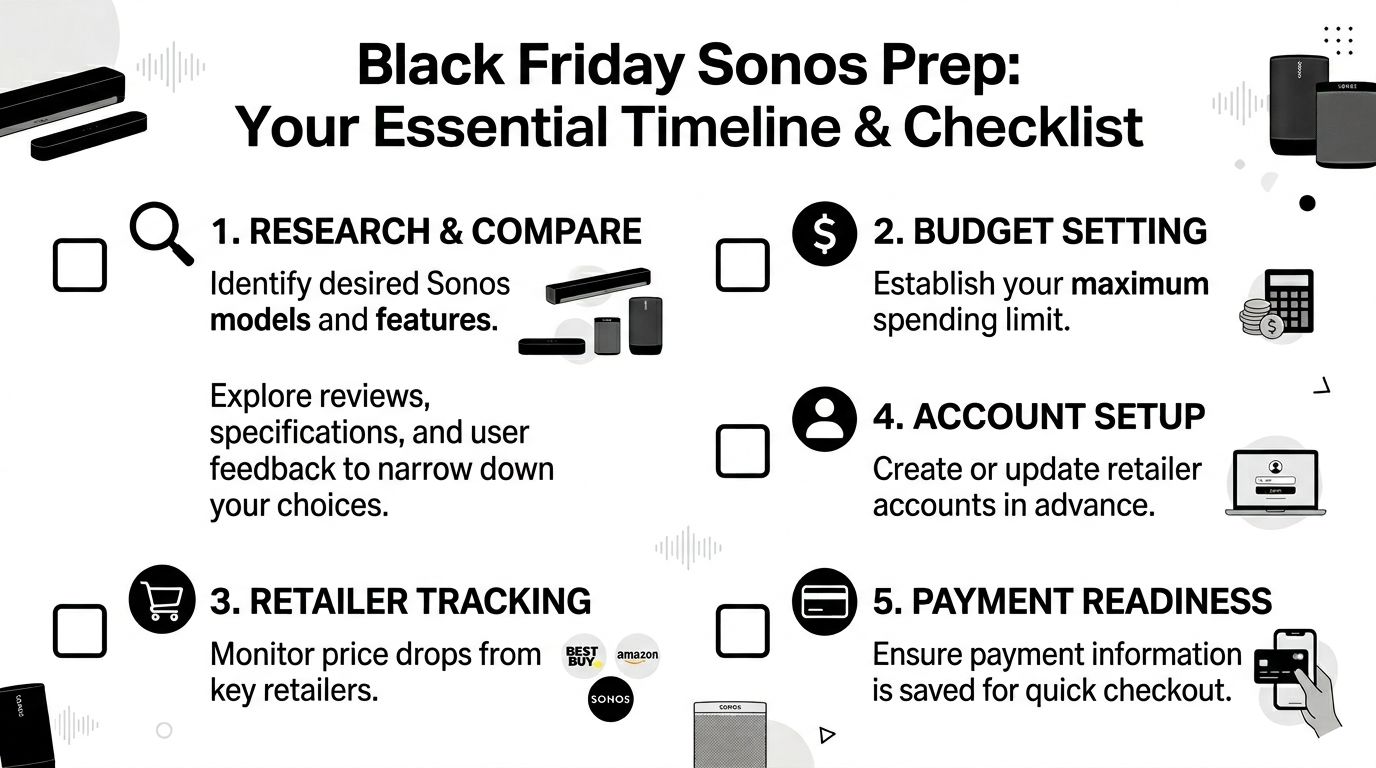
Walk your house and make a simple audio map. Don’t overcomplicate it. Just identify the rooms that matter most and what each room needs to do.
Then rank those rooms in order. Most homeowners shouldn’t try to buy the whole dream system in one rush. Start with the room that gets used every day.
Build your shopping list around function, not product hype.
A simple checklist works:
TV room need
If your main frustration is poor dialogue and weak movie sound, start with a soundbar.
Music zone need
If you care more about filling a kitchen, bedroom, or office with music, standalone speakers may be the better buy.
Expansion plan
Ask yourself whether this first purchase is a starter system or part of a larger home plan.
Control plan
Decide how you want to use it. App control is fine. But if you already want scenes with lighting, shades, and voice control, make sure your purchase fits a larger automation path.
Don’t let a bundle decide your system architecture for you.
Do the boring setup work early. That's how good buyers beat rushed buyers.
This is also the right moment to check your network basics. Sonos can be forgiving, but weak Wi-Fi, crowded equipment cabinets, and poorly placed access points still create headaches. If your home already struggles with smart TVs, doorbells, or streaming boxes, fix that issue before you add more connected audio.
Keep your standards tight. If the product isn’t on your list, skip it. If the discount looks good but the product doesn’t solve your main room, skip it. If a “deal” only makes sense because you’ve talked yourself into future use, skip it.
A short buying filter helps:
| Question | If yes | If no |
|---|---|---|
| Does it solve a real room problem? | Buy with confidence | Keep looking |
| Will it fit your longer-term system? | Strong candidate | Likely wrong product |
| Do you know where it will go? | Move forward | Pause |
| Can your network and room support it? | You’re ready | Fix setup first |
That’s the difference between a smart Black Friday buy and a holiday impulse purchase you regret by New Year’s.
Not all Sonos deals are equal. Some are clean, straightforward discounts. Others look attractive until you notice the seller is vague, the warranty is limited, or the bundle includes gear you didn’t want in the first place.
The 2025 sale gave buyers some strong reference points. The Sonos Arc Ultra dropped to $879, which was a $220 discount from its $1,099 MSRP, and the Beam Gen 2 fell to $349, down $150 from $499. The Sonos Ace also dropped to $279 from $399, according to TechBuzz’s report on Sonos Black Friday pricing. Those are the kinds of numbers that tell you the sale is real, not cosmetic.
If you want to compare current products and system fit, the Sonos solutions overview is a good baseline before you start evaluating sellers.
Most homeowners should keep it simple. New in box from an authorized seller is usually the safest move during Black Friday, especially for a main TV soundbar or the first piece of a larger system.
Refurbished can make sense if it comes through an official channel and the use case is secondary. Open-box and marketplace listings are where I’d slow down. The lower price can be real, but so can missing accessories, old returns, damaged packaging, or support problems when something goes wrong.
If you’re buying your primary family room soundbar, don’t get cute to save a little more.
| Deal Type | Typical Savings | Warranty | Best For |
|---|---|---|---|
| New in box from authorized retailer | Best during official Black Friday events, often the benchmark for comparison | Full manufacturer coverage is usually the cleanest path | Main TV rooms, gifts, first-time Sonos buyers |
| Official refurbished | Often useful when a model isn’t deeply discounted new | Varies by seller, verify before buying | Secondary rooms, lower-risk additions |
| Bundle deals | Can add value when every item in the bundle fits your plan | Usually straightforward if sold through authorized channels | Homeowners building a theater setup all at once |
| Third-party open-box | Sometimes tempting, but condition can vary a lot | Often inconsistent | Buyers who understand the risks and can inspect details carefully |
A few practical calls.
Bundles need extra discipline. If a bundle includes a subwoofer or surrounds you already planned to add, great. If the package inflates your budget and delays installation because you haven’t thought through placement, it’s not a deal. It’s a detour.
Watch for these:
The best Black Friday shopper isn’t the fastest. It’s the one who knows exactly what a real offer looks like.
A Sonos purchase gets more valuable when it stops acting like a standalone gadget and starts behaving like part of the house.
That matters because most homeowners who care about sound also care about convenience. They don’t just want better audio. They want one button for movie night, easy voice control in the kitchen, and music that follows the way they move through the home. That’s where Sonos starts to pull its weight inside a broader automation plan.
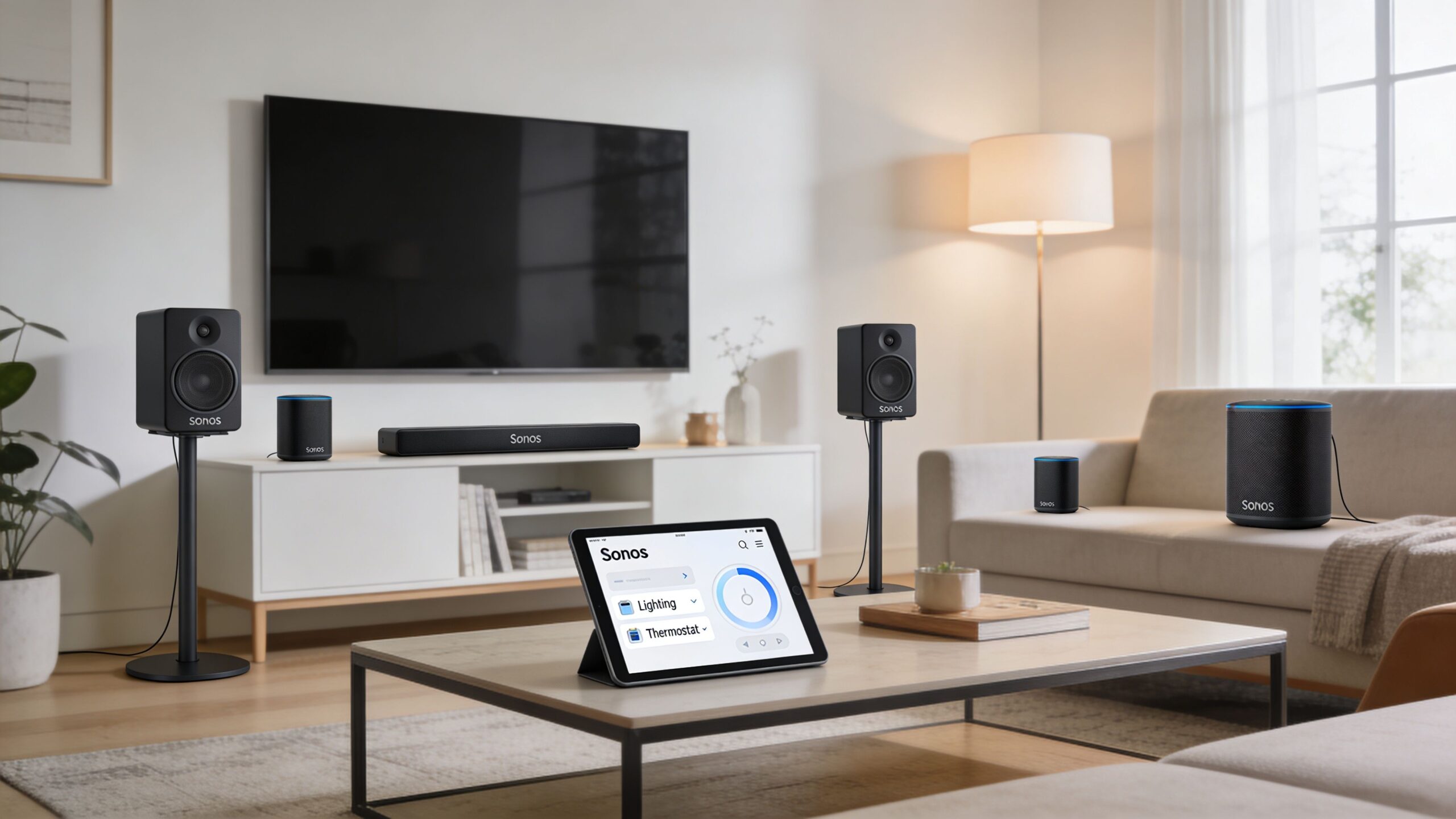
If you’re thinking beyond a single soundbar, it helps to understand how audio fits into home entertainment automation, especially when lighting, voice control, and multiroom routines are part of the end goal.
Sonos works best when you give it a defined role.
A solid example is a living room scene tied into Lutron and Josh.ai. One command can lower shades, dim lights, turn on the TV, and route the right audio source to the Sonos system. That’s better than juggling remotes and apps every time you sit down.
Most bad smart homes aren’t missing products. They’re missing coordination.
A Sonos soundbar by itself is easy. The trouble starts when the TV, source devices, lighting scenes, voice control, and Wi-Fi all have to cooperate. If one piece is flaky, the whole experience feels flaky. That’s why audio planning shouldn’t happen in isolation if you’re also thinking about automated shades, distributed Wi-Fi, whole-home control, or even entertainment upgrades like Kaleidescape in a dedicated theater.
Good integration feels boring in the best way. You press one button, and the room responds correctly every time.
If you’re shopping sonos on sale for black friday, ask a better question than “What speaker should I buy?”
Ask these instead:
That shift changes everything. It pushes you away from random purchases and toward a system that fits your home.
A Sonos box is easy to buy. A clean, reliable result takes more thought.
DIY setups usually run into the same problems. The soundbar ends up too low or too high. The TV gets mounted first and blocks the best speaker placement. Wires remain visible because nobody planned power correctly. Rear speakers get shoved where furniture allows instead of where they should perform best. Then the homeowner decides Sonos is underwhelming when the issue was never the product. It was the install.
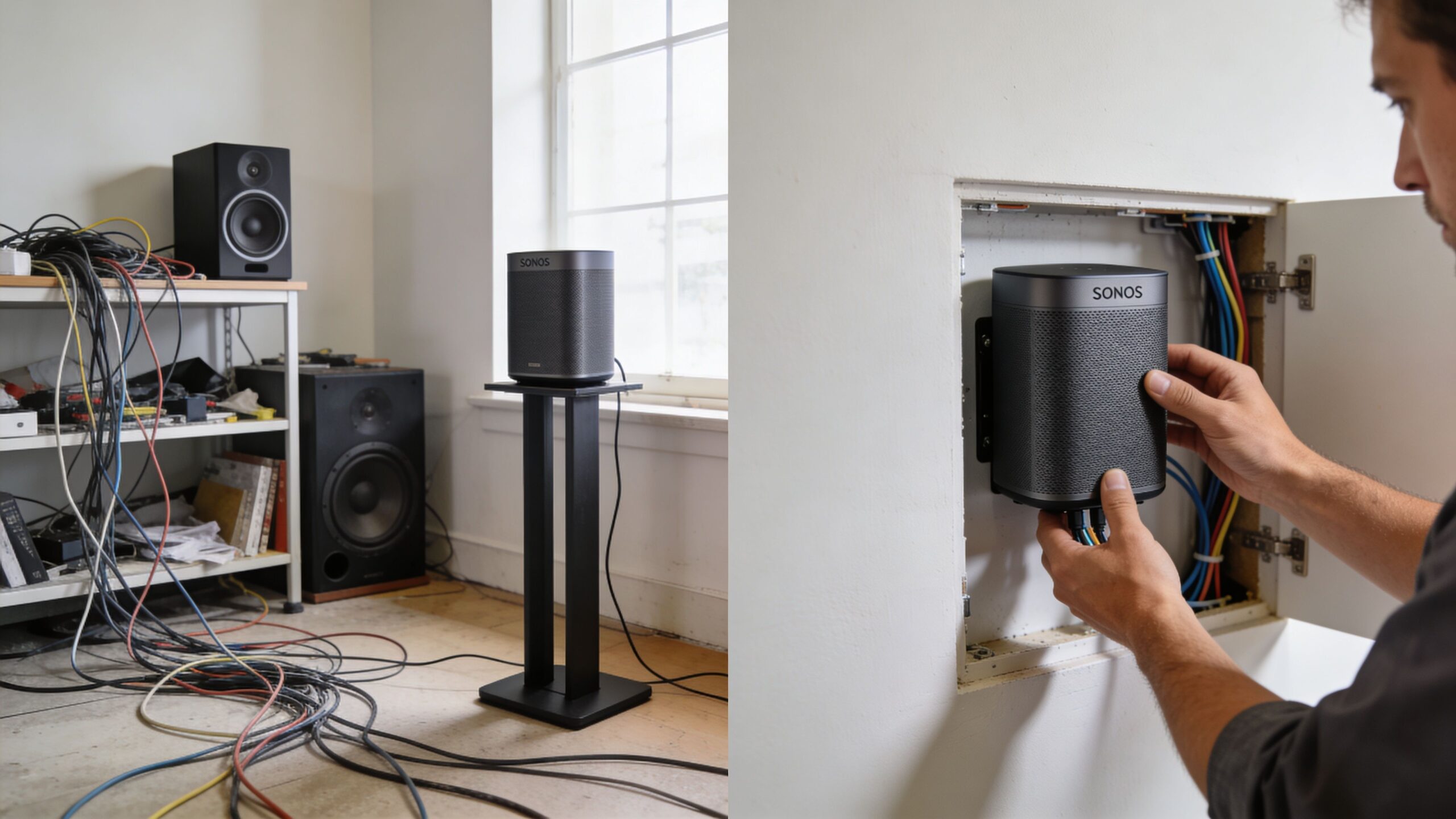
Professional setup isn’t just about hiding cables. It solves performance problems before they become frustrations.
That matters for ordinary living rooms, but it matters even more in larger projects. A homeowner may start with a Black Friday soundbar purchase, then move into a custom home theater, whole-home music, pre-wire in a new build, outdoor sound, or even exterior lighting and sound tied into the same control philosophy. The product is the small decision. The infrastructure is the big one.
The online conversation around Black Friday is always broad and generic. It assumes every buyer has the same room, the same network, and the same priorities. They don’t.
A source covering the 2025 Sonos promotions noted those deals drew buyers and integrators in the US Midwest, including Wisconsin and Illinois, and tied that interest to home theater builds, security integrations, and automation through early December in Smart Home Sounds’ Black Friday roundup. That lines up with what local homeowners need. Not just a discount, but guidance on how the purchase fits the house.
If you’re planning a larger audio project, it’s worth looking at what a real house sound system installation involves before you assume a few retail boxes will solve the problem.
To be fair, not every purchase needs a crew.
If you’re adding a single portable speaker, putting music in a simple office, or replacing one component in an existing working setup, DIY may be fine. But once your project includes any of the items below, I’d stop winging it:
A good install doesn’t just look cleaner. It removes friction you’d otherwise live with every day.
That’s the part people undervalue. They compare installation cost against a box price, when they should compare it against years of daily use.
The best Black Friday Sonos purchases don’t start with the discount. They start with a plan.
If you know which room matters most, which product fits it, and how that purchase connects to the rest of your home, you’ll buy better and enjoy it more. If you don’t, the sale can push you into the wrong soundbar, the wrong bundle, or a setup that never feels finished.
That’s the takeaway when shopping sonos on sale for black friday. Be selective. Compare offers carefully. Think about placement, control, and expansion before you buy. And if your goals include more than one room, treat Sonos as part of a larger system that may eventually include smart lighting, shades, voice control, home theater, or outdoor entertainment.
A soundbar can fix weak TV audio. A well-planned system can change how your house feels every day.
Buy from the seller with the clearest pricing, return process, and delivery confidence. For most homeowners, the safest Black Friday path is an authorized seller with straightforward support. Don’t chase a slightly different listing from an unknown marketplace vendor just to feel like you found a hidden deal.
Yes, in many cases. That’s common. The key is making sure the products are the right models for the room, complete, in good condition, and compatible with the rest of your system plan. Installation is much smoother when the hardware choice was smart in the first place.
Sometimes. Older models can be excellent values if they fit your use case and software path. The mistake is buying old gear just because it’s cheap without considering app support, future expansion, and whether you’re mixing generations in a way that creates friction later. If you’re unsure, prioritize system compatibility over bargain hunting.
If you want help choosing the right Sonos setup, planning a clean install, or tying audio into a bigger smart home with theater, lighting, networking, or outdoor entertainment, talk to Home AV Pros. They design and install custom home audio, home theater, new home low-voltage systems, restaurants, outdoor lighting and sound, and integrated smart home solutions across southern Wisconsin and nearby northern Illinois.

Copyright © 2026. Home AV pros. All rights reserved.