
A lot of homeowners start in the same place. They want a TV in the room, but they don't want the room to look like it was designed around a TV. In a bedroom, office, sitting room, or smaller living area, a large black screen can overpower everything else on the wall.
That's where the 43 inch Frame TV enters the conversation. It's not just another flat panel with a nice picture mode. It's a display built for people who care as much about trim, furniture, lighting, and sightlines as they do about streaming apps and HDMI inputs. The appeal is obvious. The challenge is that the clean, art-like look only works when the installation, wiring, room layout, and smart home integration are handled correctly.
The most common scenario looks like this. A homeowner has a beautiful room with built-ins, good natural light, and carefully chosen décor. They want a screen for evening shows, news, or casual viewing, but they don't want the wall to look dead when the TV is off.
That's exactly why the Frame line has stayed relevant for so long. The Frame TV series has been a staple in the lifestyle TV market for over seven years, with the 43-inch size being a central part of its identity since early generations like the 2018 model according to Samsung's 2018 specification sheet. In practical terms, that means this isn't a one-season experiment. Samsung has kept refining a format that homeowners and designers continue to ask for.
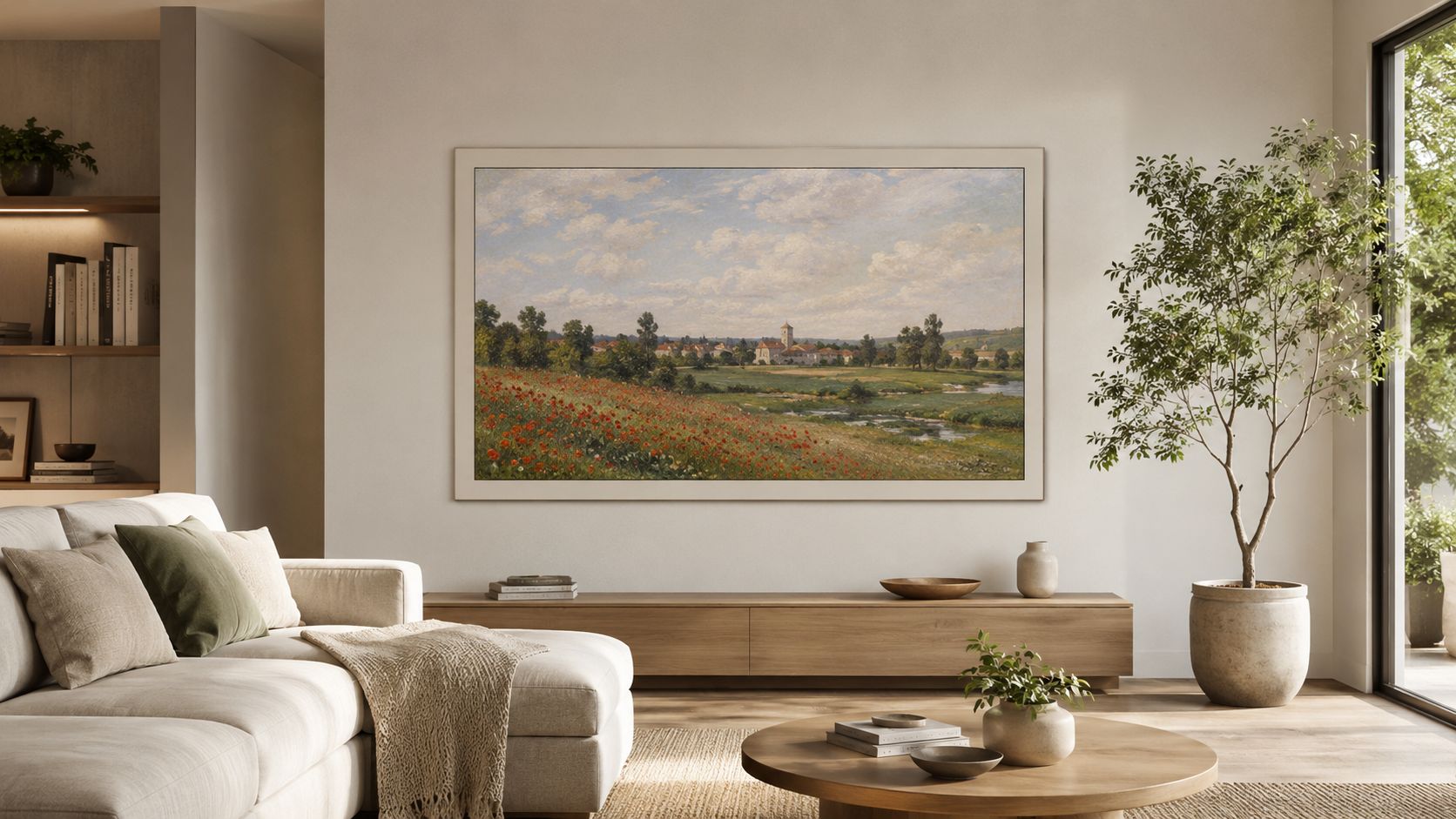
The 43 inch model works best in spaces where a larger panel would feel heavy or out of scale. That usually means:
This size is rarely the right choice for a dedicated theater room. It can be the right choice for a room that needs to stay visually calm.
A Frame TV succeeds when the room still looks intentional with the TV off.
The TV itself is only part of the outcome. A good result depends on mount height, the path for the connection cable, where the external box lives, how the room is furnished, and whether the rest of the system was planned with the TV in mind.
That's why the 43 inch Frame TV is best thought of as an integration product, not just a retail TV purchase. If you treat it like a standard set and hang it quickly, you'll usually end up with the one thing you were trying to avoid: a TV that still looks like a TV.
Most televisions are designed to disappear only when they're turned off. The Frame is designed to stay present without looking intrusive. That difference matters more than any marketing tagline.
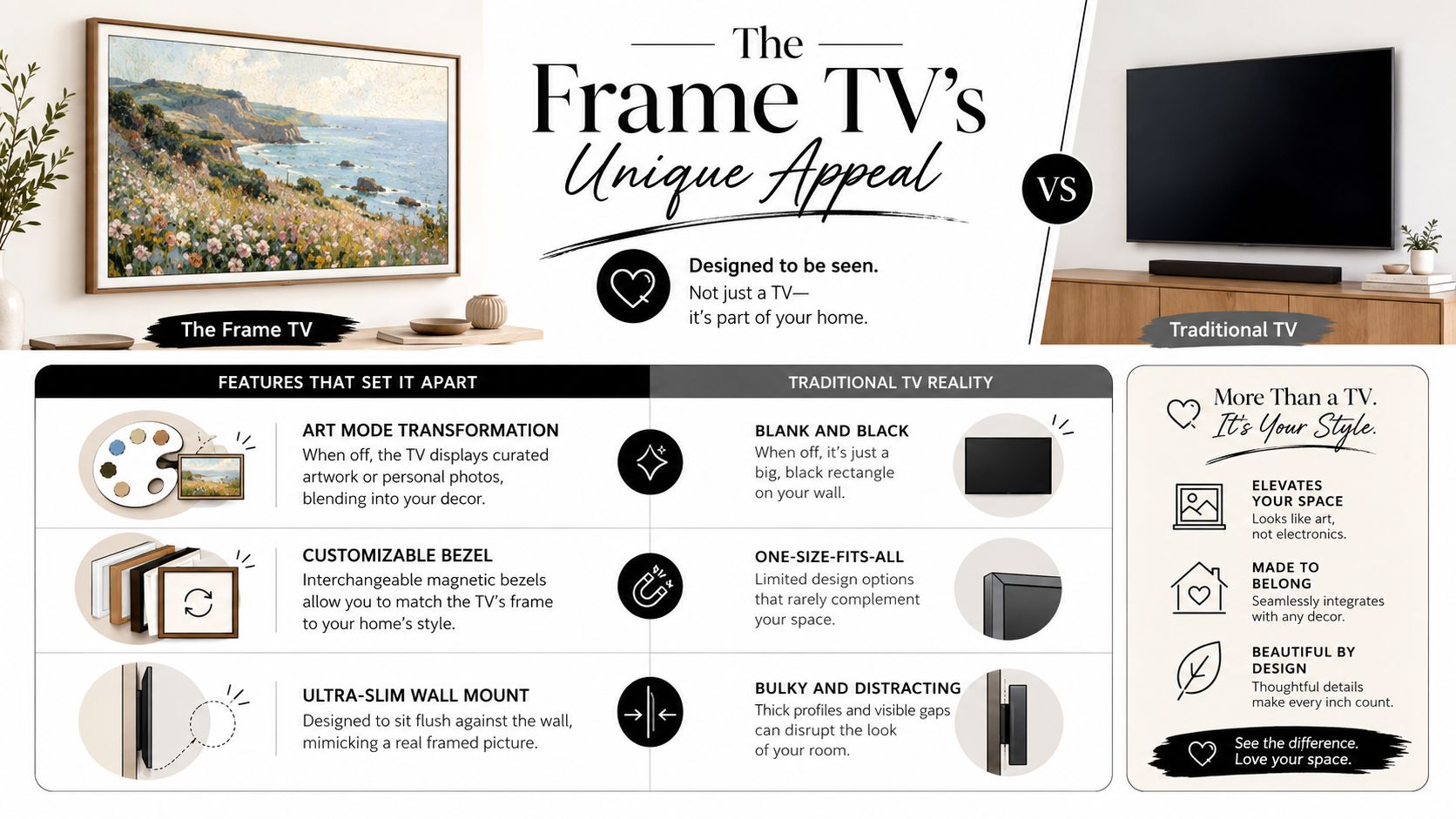
The core idea is simple. Instead of leaving a blank, dark screen on the wall, the TV displays artwork or personal photos when it isn't being used for normal viewing. That one shift changes how the room feels during the day.
For homeowners who've spent time on millwork, paint color, or furniture layout, that matters. A standard TV often becomes the visual center of the room whether you want it to or not. The Frame softens that effect.
The 43-inch Frame TV uses a 4K Ultra HD QLED panel with a native resolution of 3,840 x 2,160, and independent review coverage notes that the 43-inch version uses a 60 Hz panel. That high pixel density is one reason art and photography look crisp even at closer range, which is especially important on a smaller screen intended for decorative use, as noted in RTINGS' Samsung The Frame 2024 review.
That doesn't automatically make it the right TV for every use case. It does make it more believable as wall art than a low-resolution display would be.
A Frame install looks polished when the bezel choice, wall color, furniture tone, and displayed artwork work together. Homeowners often focus on the TV first and style choices second, but the room usually rewards the opposite approach.
If you're choosing trim or bezel color, a visual guide on how to Complement artwork with frame colors can help narrow down combinations that feel intentional rather than improvised. For the TV-specific side, this guide on Frame TV bezel options is useful when you're trying to match the set to the room instead of forcing the room to adapt to the TV.
Practical rule: If the bezel, art selection, and mount height don't match the rest of the room, the illusion breaks fast.
The 43 inch Frame TV is easy to like. It's harder to place correctly. Size alone doesn't decide whether it will feel elegant or undersized. Room width, seating position, and side-angle viewing matter more than most buyers expect.
This size usually performs best when one or two people watch from a fairly direct angle. That makes it a strong fit for bedrooms, offices, dens, and compact living rooms.
It becomes less ideal when the room is wide and seating spreads out to the sides. Independent testing notes that picture quality degrades at wider viewing angles, a common trait of the VA panels used in this category, which makes seating position important for shared viewing, according to RTINGS' viewing angle testing.
That single trait changes the recommendation more than many homeowners realize. If one person watches from a bed or desk, the TV can feel excellent. If several people sit across a sectional at different angles, the room may call for a different display strategy.
A simple planning table helps keep expectations realistic.
| Viewing Style | Recommended Distance | Best Use Case |
|---|---|---|
| Close and intentional | Sit fairly close for detailed art and casual TV viewing | Home office, guest room, small den |
| Balanced everyday viewing | Mid-room seating with a direct line to the screen | Bedroom, apartment living room |
| Farther-back casual viewing | Seats placed deeper in the room, still mostly centered | Secondary family space, lounge area |
Because the panel is 4K, the image stays sharp at close range. That helps the 43 inch format in rooms where people sit near the display and want artwork to look clean instead of soft.
One mistake I see often is homeowners choosing the TV before they've decided how the room will be used. A room staged for conversation, occasional streaming, and art display has different priorities than a room built around movie night.
If you're trying to visualize furniture placement before the install, digital examples of staging empty living rooms can be surprisingly helpful for seeing whether a 43 inch screen will feel proportionate on the wall. Height matters too. This guide on the best height to mount a TV on a wall is worth reviewing before anyone drills into drywall.
The signature look of a Frame TV doesn't come from the screen alone. It comes from everything you don't see. The installation is where the project either looks custom or looks compromised.
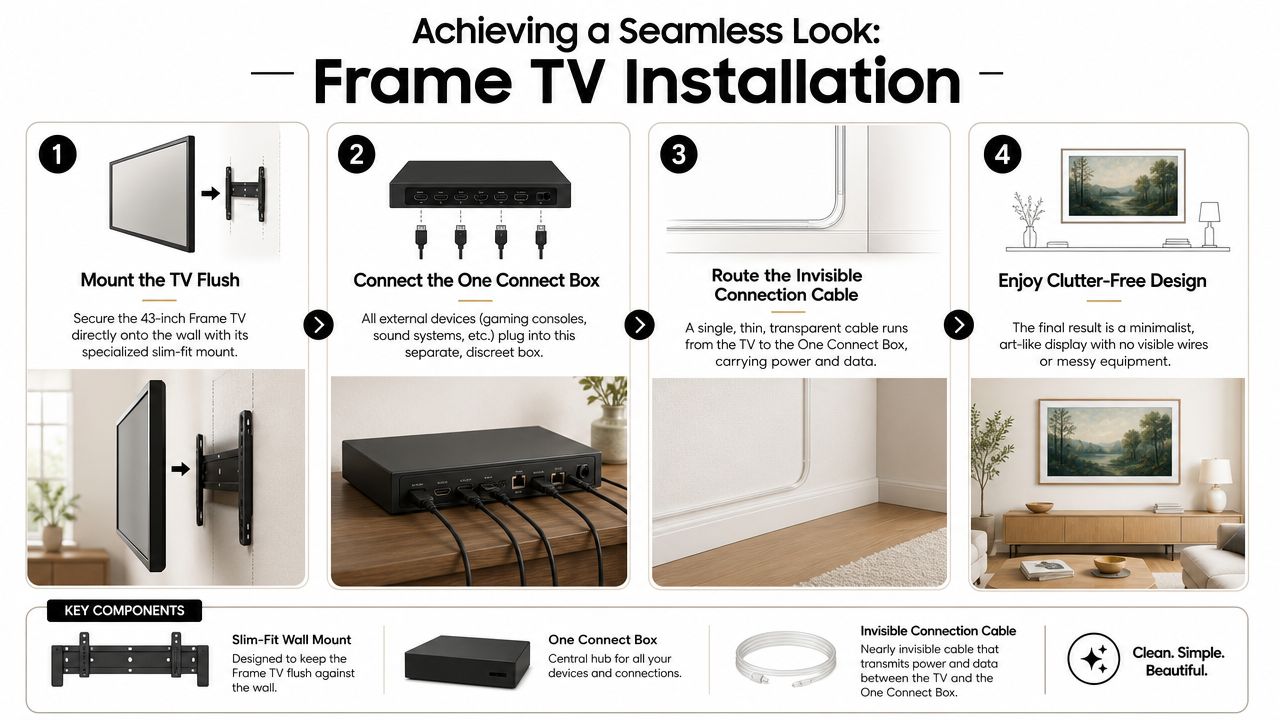
The 43 inch model isn't a one-box TV in the way many people assume. Samsung's current 43-inch LS03FA generation includes four HDMI inputs that support up to 4K at 60 Hz, plus one Ethernet port and one digital optical output through the One Connect Box, as shown on Samsung's product page for the 43-inch The Frame.
That's good news for connectivity. It means an Apple TV, cable box, game console, and sound system can all fit into a normal setup. The catch is planning where that box lives.
A clean install usually puts the box in one of these places:
What doesn't work well is leaving the box on the floor, on a mantel, or loose inside a visible shelf opening. The TV may look flush on the wall, but the room still feels unfinished.
A practical walk-through helps show what this process looks like in practice.
A lot of DIY installs fail on one simple point. The mount may be straight, but the power and cable path weren't designed before the TV went up.
For a flush result, plan for:
If the home supports it, a hardwired connection is usually the more reliable path than depending entirely on Wi-Fi. In larger homes or remodels, that often means integrating the TV area into a stronger network design with hardware from brands like Ubiquiti.
For homeowners planning the cable path themselves, this guide on how to hide TV wires and cables covers the decisions that affect both appearance and serviceability.
If you can see the wiring from normal seating position, the install isn't finished.
A 43 inch Frame TV makes the most sense when it is treated as one device inside a larger room system. The screen may be the visible piece, but the day-to-day experience depends on how well it works with lighting, shading, audio, control, and the home network.
That matters more with a Frame TV than with a standard living room display. Homeowners buy it because they want the wall to stay clean and the room to serve more than one purpose. If control still lives across four apps and two remotes, the install looks refined but behaves like a patchwork.
The goal is simple. Press one button or say one command, and the room responds correctly.
With Josh.ai, a voice command can turn on the right source, bring the TV out of Art Mode, set Lutron lights to a viewing level, and adjust shades without making you walk around the room fixing each device manually. In a mixed-use room, those scenes matter more than spec-sheet features. They determine whether the TV feels natural to live with or slightly annoying every time you use it.
Audio needs the same level of planning. A lot of homeowners add Sonos after the TV is already mounted, then find out the control flow is clumsy or the room has no clean place for the speaker. If the system is designed properly from the start, music scenes, TV audio, and grouped-room playback all make sense from the same interface.
Integration is not only about voice control. It also includes source selection, audio return, network reliability, and how the TV behaves when the room changes function during the day.
In a guest room, office, or den, the 43 inch model often works well because the wall can act like decor in the afternoon and switch to casual viewing at night. That transition should be programmed, not improvised. A good system can call the correct input, set the room lights, and hand off audio without asking the homeowner to troubleshoot HDMI behavior from the sofa.
If the house includes Kaleidescape, Apple TV, cable, or other distributed sources, the Frame TV should be integrated as one endpoint in the larger AV plan. That is usually where DIY projects start to show their limits. The TV itself is easy to buy. Getting source devices, control logic, audio zones, and lighting scenes to behave consistently takes more planning.
Homeowners aiming for that level of coordination usually need a broader home entertainment automation system design rather than a TV-only install.
In renovation and new construction work, this is usually the point where the scope becomes clear. The Frame TV may sit on one wall, but the outcome is shaped by decisions about lighting keypads, shade groups, equipment placement, Wi-Fi coverage, and audio zones in nearby spaces. That is the difference between a screen that looks good in photos and a room that works properly every day.
The DIY narrative around the Frame TV is misleading. People see a slim panel and assume it's just a neater version of a normal wall mount job. It isn't.
The first mistake is mounting it too high. Homeowners often treat it like over-fireplace décor or a sports bar TV, then wonder why it never looks natural in art mode.
The second is failing to plan for the external box. If there's no destination for that hardware before install day, the system ends up with a visible compromise somewhere in the room.
The third is networking. Some users and reviewers have noted that the software can feel laggy or buggy compared with more conventional smart TV experiences, which makes a stable network and careful setup more important than people expect, as discussed in this critical coverage of Samsung's newer Frame Pro and broader Frame experience.
A Frame TV can look expensive and still feel unfinished if the wiring path, software behavior, and room ergonomics were afterthoughts.
A good install treats the TV wall like part of the home's finish package. That means checking stud placement, outlet depth, wire path, equipment ventilation, network coverage, and control preferences before anyone starts cutting or mounting.
That process sounds slower. It usually saves time because it avoids the callback where someone says, “Can we move it down, hide that cable, and make the box disappear?”
A 43 inch Frame TV asks for more disciplines than people expect. You need clean mounting, concealed wiring, power planning, networking, source integration, and enough design sense to make the wall look balanced when the screen is showing art.
That's why this kind of project usually benefits from an integrator rather than a basic mounting crew. A professional can coordinate the TV with lighting, shades, audio, networking, and control so the room behaves like one system. In residential projects, that often expands into a larger scope over time, including whole-home audio, dedicated theater spaces, new construction planning, outdoor sound, and lighting systems from brands like Oelo.
Even adjacent trades point in the same direction. If you've looked at security projects, you've probably seen how planning determines the result long before devices are installed. The same logic shows up in resources like REDCHIP's CCTV installation tips. Placement, wiring, access, and infrastructure always matter more than the product brochure.
For homeowners in southern Wisconsin and northern Illinois, Home AV Pros is one local option for projects that need more than simple TV hanging. Their scope includes smart home automation, TV mounting, networking, custom home theater, new home builds, restaurants, home audio solutions, and outdoor lighting and sound, with a primary emphasis on residential integration.
If you're planning a 43 inch Frame TV and want the wall, wiring, network, lighting, and control to work together, talk with Home AV Pros. A well-designed install makes the TV look better, work better, and feel like part of the home instead of an add-on.

Copyright © 2026. Home AV pros. All rights reserved.