
When you start looking for local security camera installers, it's easy to get lost in all the options. But the very first decision you’ll make—choosing between a DIY kit and a professional installation—is by far the most critical one for your home’s security. A pro install does more than just get your system working; it ensures everything is seamless, reliable, and truly integrated with your life. It’s the difference between sticking a camera on a wall and creating a genuinely smart, secure home.
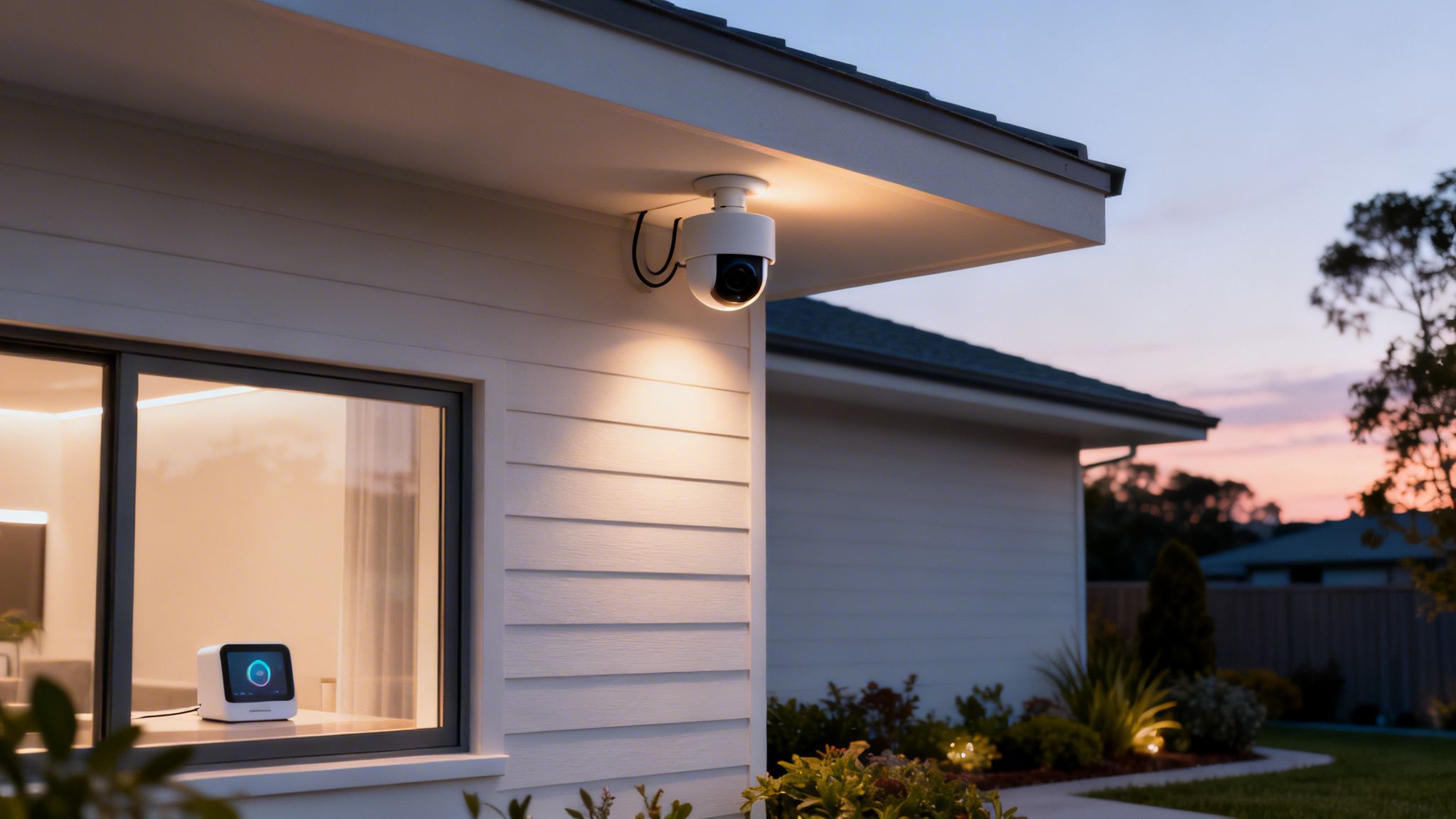
The allure of a DIY security camera kit is strong. The boxes promise a quick setup and instant peace of mind. But from our experience working with homeowners across southern Wisconsin and northern Illinois, the reality is often a mess of tangled wires, frustrating Wi-Fi dead zones, and cameras that drop their connection right when you need them.
This is where hiring an expert makes all the difference. It's not just about saving you a weekend of frustration. It's an investment in a system that’s reliable, looks clean, and actually unlocks the full potential of your smart home. A true professional doesn't just hang cameras; they design a complete security and automation solution specifically for your home.
Here’s a practical breakdown of what to expect when you tackle it yourself versus hiring a dedicated home automation professional.
| Consideration | DIY Installation | Professional Installation (e.g., Home AV Pros) |
|---|---|---|
| System Design | Guesswork on camera placement, often creating blind spots. Limited by kit components. | Strategic site survey to identify key vulnerabilities and optimal viewing angles. |
| Installation Quality | Exposed wires, visible drill holes, and potential damage to walls or siding. | Clean, concealed wiring with minimal disruption to your home's aesthetics. |
| Network Reliability | Relies on existing Wi-Fi, which can be unstable and lead to dropped connections. | Hardwired connections or a dedicated, robust wireless network for flawless video streaming. |
| Integration | Limited to a single app. Doesn't connect with other smart home systems. | Seamless integration with lighting, audio, and whole-home control systems. |
| Support | You’re on your own with online forums or generic customer service hotlines. | Ongoing local support, maintenance, and system fine-tuning from a team you know. |
Ultimately, the choice comes down to what you value most: a lower upfront cost with potential headaches, or a higher initial investment for a system that is truly reliable, integrated, and professionally supported.
For us at Home AV Pros, security is just the starting point. The real magic happens when we integrate your cameras into a cohesive smart home. We specialize in making your security system work in concert with other high-end systems, creating a home that responds intelligently to what's happening.
Imagine this:
The demand for this level of sophistication is exploding. The smart home security camera market is on track to hit $10.4 billion by 2026. Yet studies reveal a critical weakness in the DIY approach: nearly 40% of self-installations fail due to improper wiring or poor network configuration.
Whether you're building a new home, renovating a restaurant, or just upgrading your current house, a professional integrator brings value that a box kit can't match. In new construction, we pre-wire for a powerful Ubiquiti network that can support not only your cameras but also a custom Kaleidescape home theater, whole-home audio solutions, and landscape lighting. For existing homes, we focus on meticulous installation that respects your space while delivering perfect performance.
Wondering about the investment? We break down the factors that influence project pricing in our guide to security camera system installation cost.
This is the kind of custom automation—from custom home theaters and dynamic lighting to immersive home audio solutions—that sets a dedicated local installer apart from any generic, one-size-fits-all solution.
Before you even think about picking up the phone to call an installer, let's talk about your vision. What do you actually want your security system to do? This is the single most important question, and the answer will shape your entire project.
Are you just looking to deter a potential break-in? Or do you need to keep a close eye on the kids in the pool? Maybe you're dreaming of a fully automated home where everything works together seamlessly. Getting clear on this now will save you a ton of headaches later and ensure you get a system that truly fits your lifestyle.
Think about your day-to-day life. Do you want your cameras to be silent observers, or do you want them to be an active part of your home’s security?
Here’s what I mean. Imagine a camera senses movement near your fence after dark. A basic system just records it. But a truly smart, integrated system can instantly trigger your Lutron landscape lights to flash and play a pre-recorded message through your Sonos outdoor speakers. Now that’s a deterrent. This is the difference between simply recording an event and actively preventing one.
This level of integration is what separates a DIY setup from a professionally designed one. Any camera can give you a live feed on your phone. But an expert can weave all your technology together.
With a smart home controller like Josh.ai, you can walk into a room and just say, "Josh, show me all the outdoor cameras." Instantly, every camera feed pops up on the nearest TV. No fumbling for apps, no logins. It’s security that feels completely effortless.
If you're building a new home, especially in the southern Wisconsin or northern Illinois area, this planning stage is absolutely critical. Pre-wiring your home for technology is one of the best investments you'll ever make. An installer can run all the necessary cabling for a rock-solid Ubiquiti network, which is the foundation of any modern smart home.
This isn't just for your cameras. A powerful network ensures everything else works flawlessly, too, including:
Thinking ahead also means planning for what you might want down the road. This applies to any project, whether it’s a private home, a new restaurant, or a commercial office.
Proper pre-wiring saves a fortune in time and mess compared to retrofitting later. We can plan for future additions—like Oelo permanent lighting or an expanded audio system—ensuring your home’s technology can grow right along with you. When you’re mapping out your security, you might also consider integrating more specialized components like advanced industrial motion security sensors for an even higher level of protection.
Ultimately, by defining your vision first, you give your installer the blueprint to build a solution that’s not just secure, but a natural, integrated part of your life.
Finding the right installer is about more than just a quick search. You're looking for a long-term technology partner for your home, not just someone who hangs cameras on a wall. This is your chance to really dig in and separate the true professionals from the rest. You need to ask tough questions and look for proof of expertise, especially if you have a high-end smart home or plan on building one.
First things first, look at their past work. Ask to see a portfolio, but don't just glance at it. Look for finished homes and pay close attention to the wiring. Can they show you discreet camera placements that blend into the home's architecture? This is where real craftsmanship shows. A top-tier installer is obsessed with clean aesthetics and will never leave you with messy, visible cables.
The real difference between a decent installer and a great one is their experience with whole-home integration. A company that only knows security cameras will fall short when it comes to creating the seamless experience you’re actually paying for. This is where you need to probe their expertise with the specific systems you own or want.
Get specific. Ask them directly about their experience integrating with platforms like:
An installer's ability to confidently discuss these integrations is a dead giveaway of their skill level. This is especially true for complex projects like new home builds, restaurants, or custom home theaters where all these systems absolutely must work together flawlessly.
A true professional knows their reputation is everything. As you evaluate installers, look at how they present themselves online and their commitment to client satisfaction. They understand the value of solid reputation management for small businesses because it's a direct reflection of their work.
Your conversation should also cover the unique demands of your specific property, whether it's a new construction or an existing home. For a new build, a great installer plans ahead, pre-wiring for a powerful Ubiquiti network and making it easy to add future upgrades like Oelo permanent lighting or expanded audio. For a retrofit, their skill is measured by how well they can achieve a clean, professional result with minimal disruption.
It's about more than just recording what happens. A modern security system should deter, monitor, and automate.
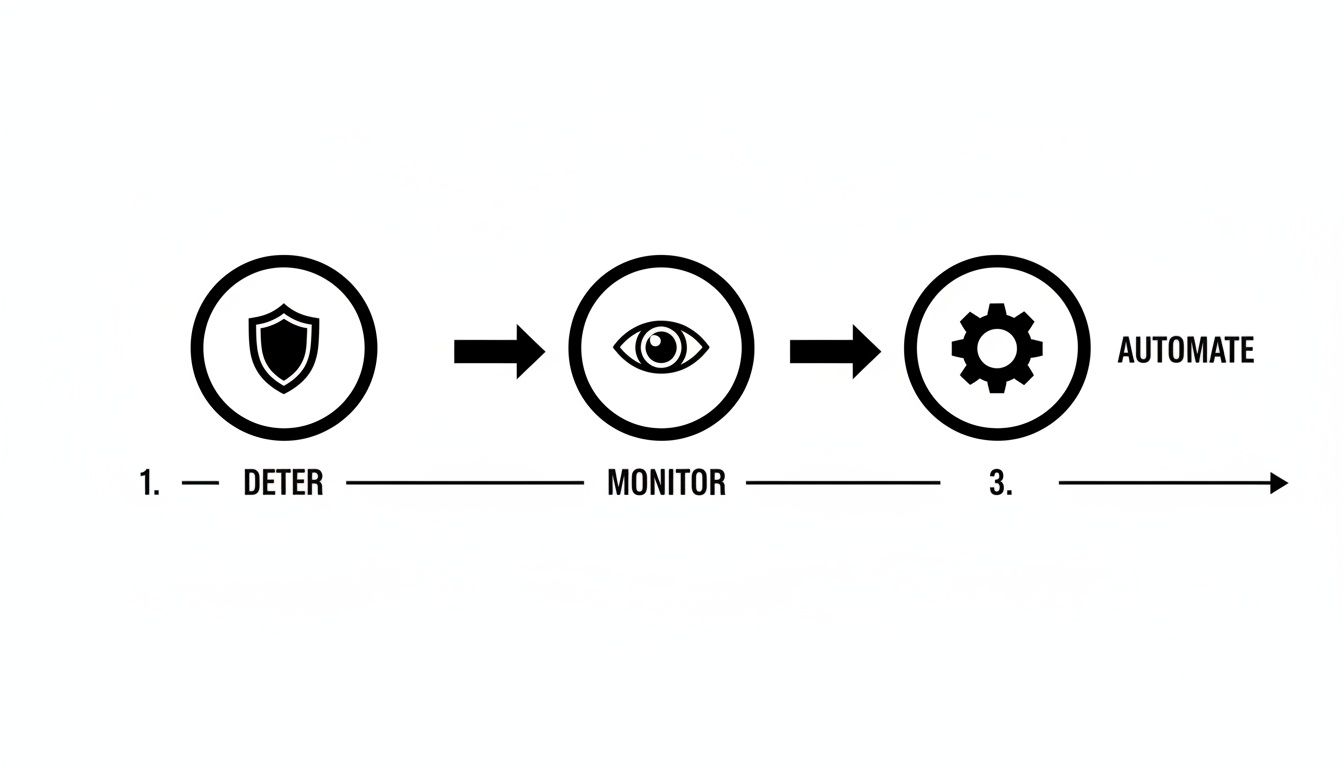
This workflow shows how a complete strategy moves beyond simple monitoring to include proactive deterrence and smart automation—that's what a professional system delivers.
Security cameras have become standard, with over 1 billion in use worldwide. In fact, 65% of new homes in the U.S. now include pre-wired camera systems, showing a clear preference for clean, integrated installs. We've seen this trend firsthand, serving clients in southern Wisconsin and northern Illinois since 2011.
Professionally installed systems not only look better, but they also last an average of five years longer than DIY setups and achieve 99% uptime, thanks to proper network configuration.
By vetting installers on their integration skills, past work, and project-specific knowledge, you can pinpoint a true expert. To see how this all comes together in a fully automated home, check out our guide on the best home automation installation companies.
Forget the high-pressure sales pitch. When you invite a true security professional into your home, you're not getting a salesperson—you're getting a strategist. This initial meeting is the cornerstone of a security system designed around how you actually live, not just a generic package pulled off a shelf.
This is where a local security camera installer really shows their worth. They’ll walk your property with you, listening to your concerns and pointing out things you might have missed. We’re talking about mapping camera placements to eliminate blind spots, sure, but it’s more than that. They're analyzing sightlines from the street, identifying potential vulnerabilities, and making sure the final setup isn’t an eyesore of obtrusive hardware.
Modern security cameras are data hogs, streaming crystal-clear HD video 24/7. A huge part of any serious consultation is a health check on your home's technology infrastructure, especially your Wi-Fi network.
An experienced installer will test your network's strength right away. If it’s not up to the task of supporting multiple high-definition streams, they’ll tell you. They might recommend upgrading to a more robust system like Ubiquiti, which is the kind of backbone a reliable smart home needs. This ensures your cameras, home audio, and other connected devices all work together without frustrating lag or dropped connections.
This is what separates a custom installer from the big-box stores. The consultation isn't just about cameras; it's about seeing how all your smart home systems can come together to make your life safer and easier.
A great installer can show you possibilities you didn't even know existed. Imagine your Ring doorbell being pressed, and instantly, the video feed pops up on every TV in the house while your Lutron-controlled exterior lights brighten to full. That's the kind of seamless, intelligent automation that you just can't get from a DIY kit.
This level of integration is why the North American security camera market is projected to command a 44.4% revenue share by 2035—it's driven by smart, AI-powered systems. The benefits for you are real: faster threat detection and even potential discounts on your homeowner's insurance. Plus, having a pro handle the complex wiring and programming means you avoid the notoriously high failure rate of self-installs. You can dig into more of the data in this security camera market report.
A good consultation lays the groundwork for a system that can grow with you. Whether it's a private home, a restaurant, or a new construction project, this is the time to think about tying in landscape lighting, a dedicated Kaleidescape home theater, or even jaw-dropping Oelo permanent lighting—all controlled from one simple interface.
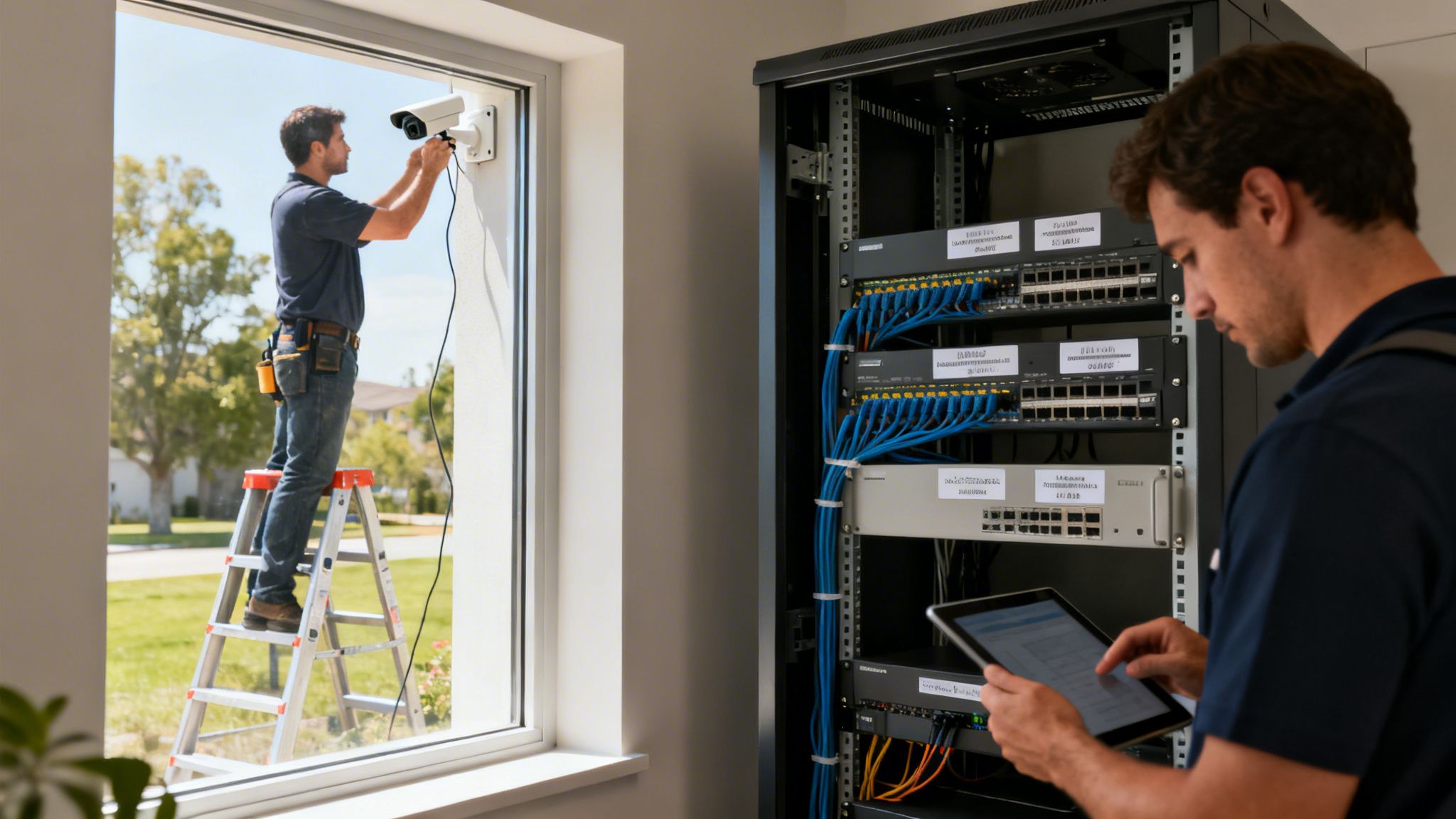
Installation day is when the blueprint becomes reality. This is the moment that separates a rushed, sloppy job from true craftsmanship. Any team of local security camera installers can mount a camera, but how they work tells you everything about the long-term quality of your system.
If you're building a new home, the process should be almost invisible. A professional crew will work from the pre-wiring plans, running cables to their designated spots before the drywall ever goes up. For an existing home, the job demands precision and respect—carefully snaking wires through walls, patching any access points perfectly, and leaving your space even cleaner than they found it.
The real value of professional installation, however, truly shines after the tools are packed away. This is where your security cameras evolve from standalone gadgets into the eyes and ears of a genuinely intelligent home. An experienced integrator is the one who connects all the dots, programming the custom interactions that simplify and secure your daily life.
This is the phase where we at Home AV Pros live and breathe, weaving best-in-class brands into a single, intuitive system. Your installer's job is to program the sophisticated "if-then" rules that make your home respond to you effortlessly.
Think about this scenario: You’re heading to bed and simply say, "Josh, goodnight." In an instant, your Lutron lights fade to off, your shades lower, the thermostats adjust for the night, and your security cameras are armed. This isn't a futuristic fantasy; it's the tangible result of a well-integrated smart home.
This is the moment it all clicks. You realize you didn’t just buy a set of cameras; you invested in a seamless, responsive living experience. The possibilities are really only limited by your imagination and the skill of your integration team.
Here are a few real-world examples of what’s possible when everything works together:
Whether it's creating a dynamic lighting scene for a restaurant patio in Lake Geneva or programming a 'welcome home' sequence that adjusts landscape lighting and music in your Barrington home, this level of integration is what turns technology into a lifestyle. It’s how your home—or business—finally starts working for you.
Finding the right local security camera installers isn't just about the initial setup. Once the cameras are mounted and the final check is cashed, your relationship should be just getting started. A truly high-performance smart home isn't a "set it and forget it" appliance; it’s a dynamic system that needs ongoing care to work its best.
Think of your installer as your home's personal IT department. You can probably handle the simple stuff, but what happens when a software update causes a bizarre glitch or a mysterious Wi-Fi dead zone pops up in the living room? Instead of spending hours troubleshooting, a quick call to a pro who knows your system inside and out can resolve the issue—often remotely—in a fraction of the time.
A quality long-term support plan, like the ones we build for our clients at Home AV Pros, is about more than just fixing things when they break. It’s a proactive strategy to keep your home’s tech running smoothly and securely.
What should that look like in practice?
I always tell my clients to think of their home's technology as a living ecosystem. You wouldn't go years without updating your phone or computer, and your smart home is no different. A trusted technology partner ensures your investment is protected and keeps getting better over time.
Your needs are going to change. Right now, your focus might be on security cameras. But next year, you might get inspired to create an amazing backyard entertainment hub or finally build that dedicated home theater you’ve been dreaming of.
This is where having a technology partner really pays off. They designed the foundation, so adding new features is far more efficient. For instance, if you decide to add Oelo permanent holiday lighting for year-round flair, an installer who set up your Lutron system knows exactly how to integrate it for seamless control.
Thinking about upgrading your audio? Adding more Sonos speakers or a stunning custom home theater with a Kaleidescape movie server is straightforward when your installer ensures every new piece plays nicely with the old. That continuity is priceless, whether it's for a new home, a restaurant, or adding immersive landscape lighting and sound.
Of course, all these additions rely on a rock-solid network. A strong support relationship gives you an expert resource to keep it that way. You can learn more about this in our guide on improving your Wi-Fi signal strength for a smart home. A robust network is what makes sure your home’s technology can handle whatever you dream up next.
When you start thinking about a professional security camera setup, a lot of questions naturally come up. We get it. Over the years, we've heard just about all of them, but a few key concerns pop up more than any others.
Here are the straightforward answers to the questions we hear most often from our clients.
Absolutely. In fact, this is one of the biggest things that separates a true integrator from a basic camera installer. Our expertise lies in making different brands and systems talk to each other.
We can tie your new, high-performance cameras directly into the smart home platform you already use. Imagine a camera detecting motion and automatically triggering your Lutron lights, sending an audible alert through your Sonos speakers, or even pausing a movie on your Kaleidescape home theater system. That’s not just a collection of gadgets; it's a smart, responsive home.
While wireless cameras have their place, any experienced local security camera installer will almost always recommend a wired system for your primary security. The reason is simple: rock-solid reliability.
Wired IP cameras, especially when running on a professionally installed network backbone like one from Ubiquiti, are just far more dependable and secure. You get a constant, high-quality video feed that doesn't compete for Wi-Fi bandwidth.
We often use wireless cameras to cover tricky spots where running a cable just isn't practical. But for the core of any serious security setup—whether it's for a new home, a restaurant, or a dedicated home theater—wired is always the way to go.
Ready to see how a professionally integrated system can transform your home or business? The team at Home AV Pros has designed and installed custom audio, video, and automation solutions across southern Wisconsin and northern Illinois since 2011. Contact us for a free in-home consultation today.

Copyright © 2026. Home AV pros. All rights reserved.