
You’re probably looking at one of three situations right now.
You’re building a new home and trying to decide what needs to be wired before drywall. You’re remodeling and want lighting, audio, Wi-Fi, and TV locations planned correctly the first time. Or you already own a pile of smart devices and you’re tired of apps, dropouts, and controls that only work when everyone in the house follows the exact same routine.
That’s where professional smart home installers matter. An integration project is not about adding gadgets. It is about designing a home that responds predictably, looks clean, and stays usable after the novelty wears off.
In southern Wisconsin, that means balancing premium systems like Lutron, Josh.ai, Sonos, Kaleidescape, Oelo, and Ubiquiti with construction schedules, older homes, lake houses, basements, and family living. The right plan feels simple when you use it. The wrong plan feels complicated every day.
A professional installer does much more than connect devices and leave. The core job involves design, infrastructure, programming, and long-term service.
The market itself shows why this matters. The U.S. smart home market is projected to reach USD 29.42 billion in 2025 and USD 84.20 billion by 2030, with household penetration expected to exceed 57% by 2025, according to this U.S. smart home devices market projection. More products in more homes means more systems that need to work together cleanly.
Good smart home installers begin with questions most homeowners do not get asked by retail sellers:
That process is what separates a system from a stack of products.
A high-functioning smart home includes several layers working together:
Tip: If the installer talks only about products and not about wiring paths, rack layout, programming, and support, you are not hearing the whole job description.
Homeowners start with one room and later expand. That is normal. The key is building the first phase so it scales.
Projects commonly include:
| Area | What a professional installer handles |
|---|---|
| New home builds | Pre-wire planning, low-voltage coordination, rack location, keypad layout, future conduit paths |
| Custom home theaters | Speaker placement, acoustic layout, projector/screen planning, control programming, hidden cable paths |
| Whole-home audio | Zone design, speaker selection, amplifier planning, app and voice control setup |
| Outdoor living | Exterior lighting, outdoor sound, patio TV, weather-aware equipment placement |
| Restaurants and light commercial | Audio zones, displays, background music, networking, control simplification |
Home AV Pros works in that broader lane, with residential automation as the primary focus and additional work in restaurants, exterior lighting and sound, new builds, and custom theaters. That range matters because the same core skills apply across all of them: clean wiring, stable networks, sensible control, and systems that do not frustrate the client six months later.
Most projects go sideways before installation begins. The cause is not bad hardware. It is a vague goal.
A homeowner says they want a “smart home,” but that phrase can mean anything from one media room to a fully integrated house with lighting scenes, outdoor audio, surveillance, shades, and voice control.
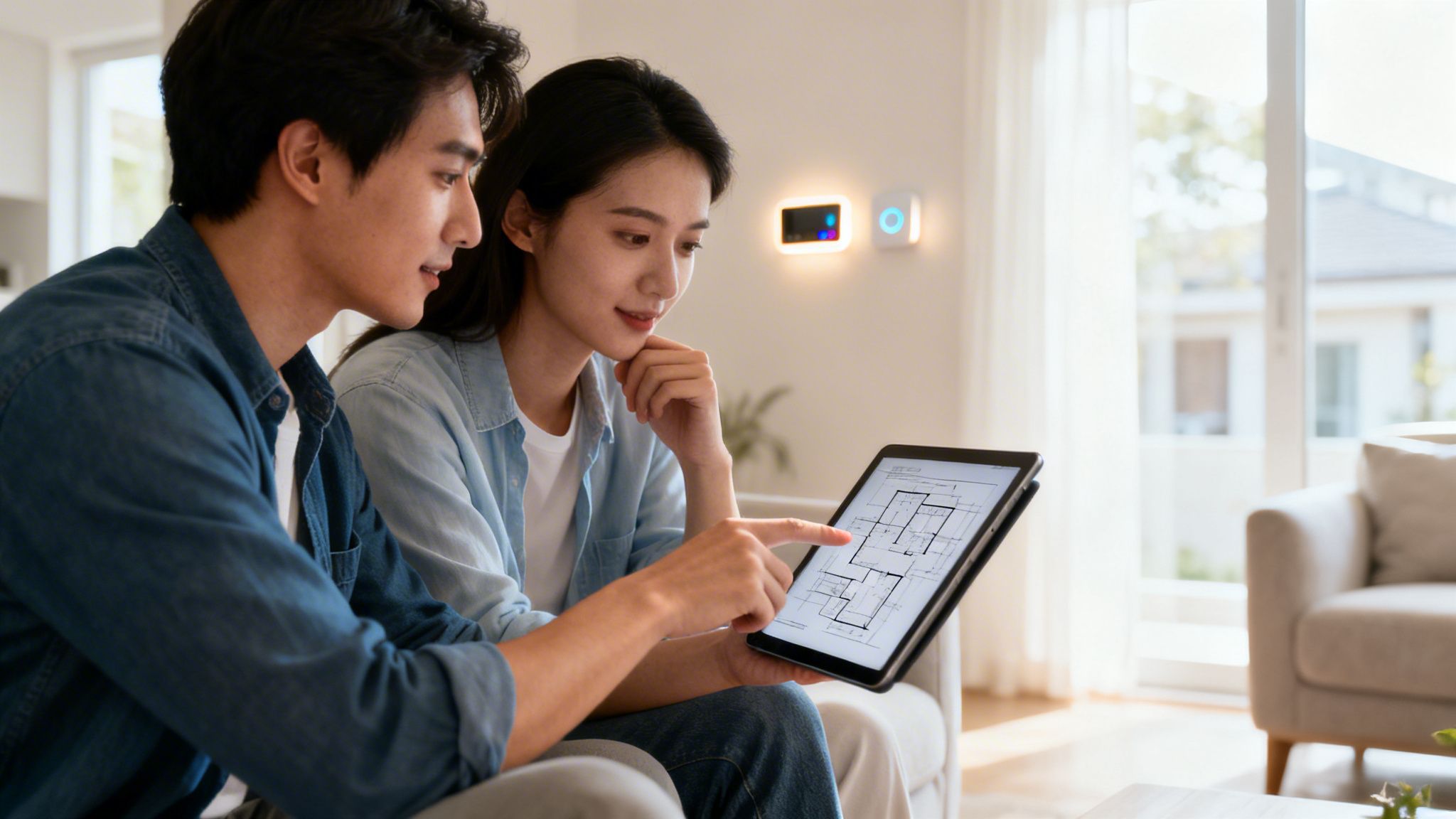
The clearest way to scope a project is to think in daily use cases.
Ask yourself:
A good vision sounds like this: “When we host, we want patio and kitchen audio in sync, outdoor lighting on at dusk, and one command that sets the main floor for entertaining.” That is a brief. “We want some smart stuff” is not.
Not every house needs full automation. Different project types call for different planning.
Single-room media upgrade
This works for homeowners who want a cleaner living room with a mounted TV, upgraded sound, better control, and network support behind it. It can also be the first phase of a larger plan.
Whole-home audio and lighting
This suits families who use multiple rooms daily and want scenes that improve the home. Kitchen, living, patio, and primary suite are common starting zones.
New construction or major renovation
Planning matters most in this phase. Pre-wire, conduit, access panels, equipment rooms, shade pockets, and keypad locations should be decided before finishes go in. If you are at that stage, this guide on low-voltage wiring contractors near me is useful because wiring strategy affects everything that comes later.
Dedicated home theater
A serious theater is its own category. Screen size, seating distance, speaker layout, acoustic treatment, lighting control, and content source all need to be designed together.
Key takeaway: Scope should follow lifestyle. If you begin with the rooms and routines that matter most, the technology choice becomes much easier.
Some homeowners care most about aesthetics. Others care about performance or privacy. Some want one polished control system instead of several branded apps.
That is where premium platforms become relevant:
A clear scope also protects you from buying in the wrong order. Installing decorative fixtures before deciding keypad locations causes headaches. Finishing millwork before speaker plans are set causes compromises. Buying TVs before wall layouts are finalized creates awkward sightlines.
Write the project in plain language first. Then let the installer translate it into equipment, wiring, labor, and programming.
The difference between a smooth project and a painful one shows up in the installer’s process long before the first device is mounted.
That matters because complexity is where many smart home projects fail. 22% of users find troubleshooting “difficult or very difficult,” 15% struggle with syncing devices, and frustration contributes to a 74% device return rate among affected users, according to this report on smart home complexity and returns. If your installer cannot explain how they prevent those problems, keep interviewing.
A lot of firms can name brands. Fewer can explain how those brands will coexist in your house.
You want smart home installers who can answer questions like:
A polished showroom is nice. A disciplined field process is better.
Southern Wisconsin homes are not all built alike. You see older homes in Madison neighborhoods, lake-area properties with outdoor systems, suburban new builds around Milwaukee, and remodels where finished surfaces limit retrofit options.
That local context changes the job:
A nearby integrator can also respond faster when service is needed. That matters more than most homeowners realize once the system becomes part of everyday life.
For a side-by-side comparison of service scope, this page on home automation installation companies is a practical reference point.
| Category | Question to Ask | What a Good Answer Sounds Like |
|—|—|
| Design | How do you turn our lifestyle into a system plan? | They ask about routines, rooms, aesthetics, future phases, and who will use the system |
| Lighting | How do you approach Lutron keypads, dimming, and scenes? | They discuss button logic, room use, fixture compatibility, and whole-home consistency |
| Control | How do you decide whether Josh.ai should control audio, lighting, shades, and media? | They explain where voice helps, where keypads are better, and how to avoid control overlap |
| Networking | What network do you install for streaming, cameras, and control? | They treat the network as infrastructure, not an afterthought |
| Audio | How do you keep Sonos zones stable in a large home? | They talk about wired backhaul, access point placement, and zone planning |
| Theater | What goes into a dedicated Kaleidescape theater design? | They mention content delivery, acoustics, control, lighting, seating, and rack location |
| Construction | How do you coordinate with builders and electricians on a new build? | They describe pre-wire walks, documentation, timing, and finish-stage coordination |
| Support | What happens after install day? | They provide service expectations, updates, troubleshooting workflow, and client education |
Some red flags are easy to miss during a sales conversation.
Tip: Ask to see not just finished photos, but rack photos, wiring photos, and keypad layouts. Clean infrastructure usually reflects disciplined installation habits.
The right installer sounds calm, specific, and realistic. The wrong one sounds easy until the house is full of little annoyances.
Most homeowners do not need a lecture on pricing. They need a clear explanation of what they are paying for and why two proposals that look similar on paper may not deliver the same result.
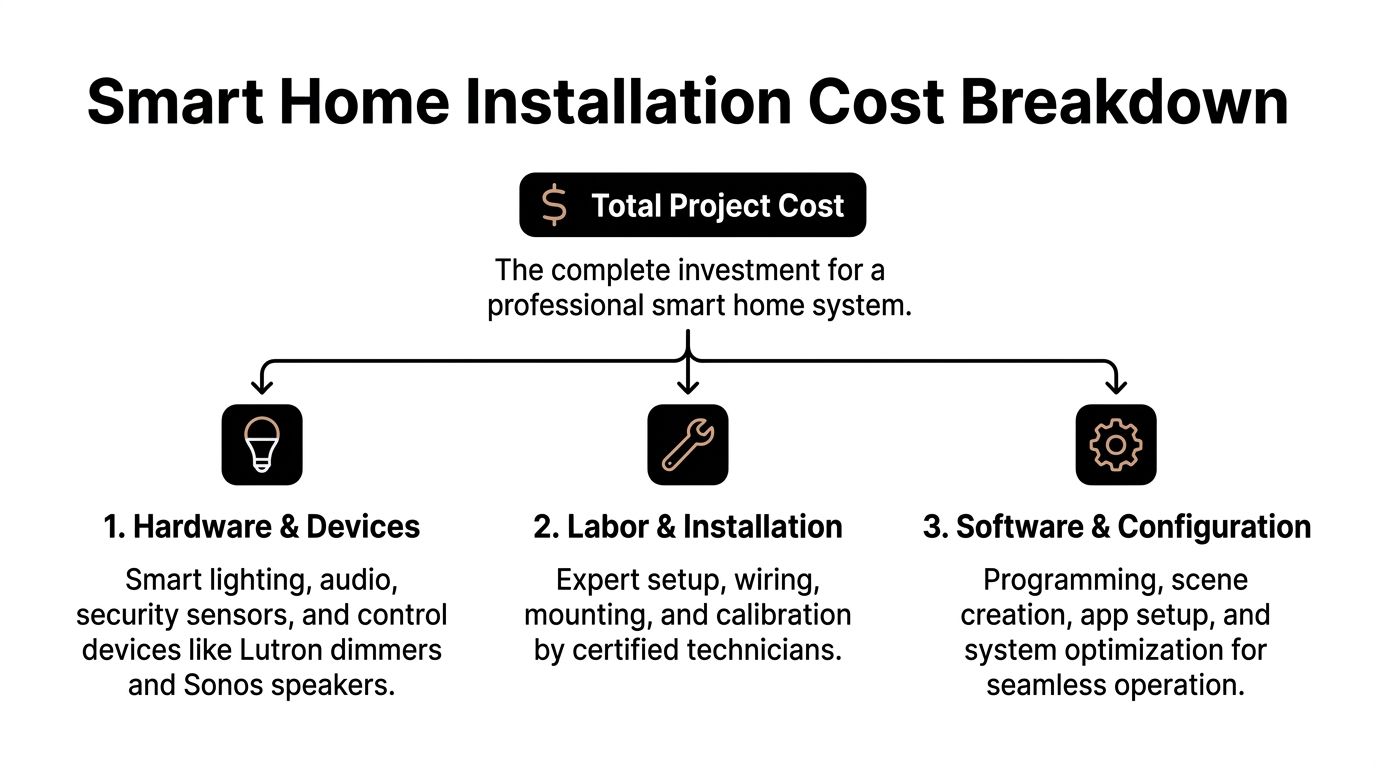
A complete smart home proposal has three layers.
Hardware and devices are the visible products. Lutron dimmers and keypads, Sonos components, Josh.ai hardware, displays, speakers, Ubiquiti networking gear, surveillance equipment, and theater electronics all live here.
Labor and installation covers physical work. That includes pre-wire, retrofitting cable paths, rack building, TV mounting, speaker installation, testing, trim-out, labeling, and finishing details.
Software and configuration is where many homeowners underestimate the effort. This is the programming, scene creation, app setup, control logic, calibration, and final commissioning that turns a pile of hardware into a system.
Professional integrators also have to run a healthy operation. Benchmarks in the trade target a 75% technician utilization rate and 84% gross margin, which helps explain why a solid quote includes more than hardware markup. Those numbers come from this smart home installation KPI analysis. In plain terms, you are paying for skilled labor, planning, administration, warranty support, and the ability to service the system after the sale.
A stripped-down proposal removes the parts that protect reliability:
That saves money only on paper. In practice, it creates callback costs, frustration, and unfinished functionality.
For a deeper look at how projects are priced, this overview of home automation system cost in 2026 helps frame the conversation.
Timelines vary widely, but the pattern is consistent.
| Project type | What drives the schedule |
|---|---|
| Single-room upgrade | Product availability, wall access, mounting conditions, programming needs |
| Whole-home audio and lighting | Number of rooms, keypad decisions, network design, finish coordination |
| New construction integration | Builder timeline, rough-in timing, trim stage, programming, final punch list |
| Dedicated theater | Room construction, acoustic work, seating, lighting, calibration, content setup |
The biggest schedule issues come from coordination, not installation speed. If electricians move fixture locations late, keypad plans may need revision. If cabinetry changes, TV or speaker placement can shift. If the builder compresses finish schedules, trim and programming may get squeezed.
Key takeaway: The fastest smart home job is the one designed early, coordinated well, and programmed after the house is fully ready for commissioning.
Judge a proposal on daily experience, not line-item shock.
A well-designed system should give you clean control, stable performance, a better-looking home, and fewer service headaches. The equipment matters. The design and commissioning matter just as much.
The most expensive mistake in a smart home is treating each subsystem as a separate purchase.
A house does not experience technology in pieces. The homeowner expects the lights, music, Wi-Fi, theater, cameras, and voice control to behave like one environment. That only happens when the installer designs the system as an ecosystem.
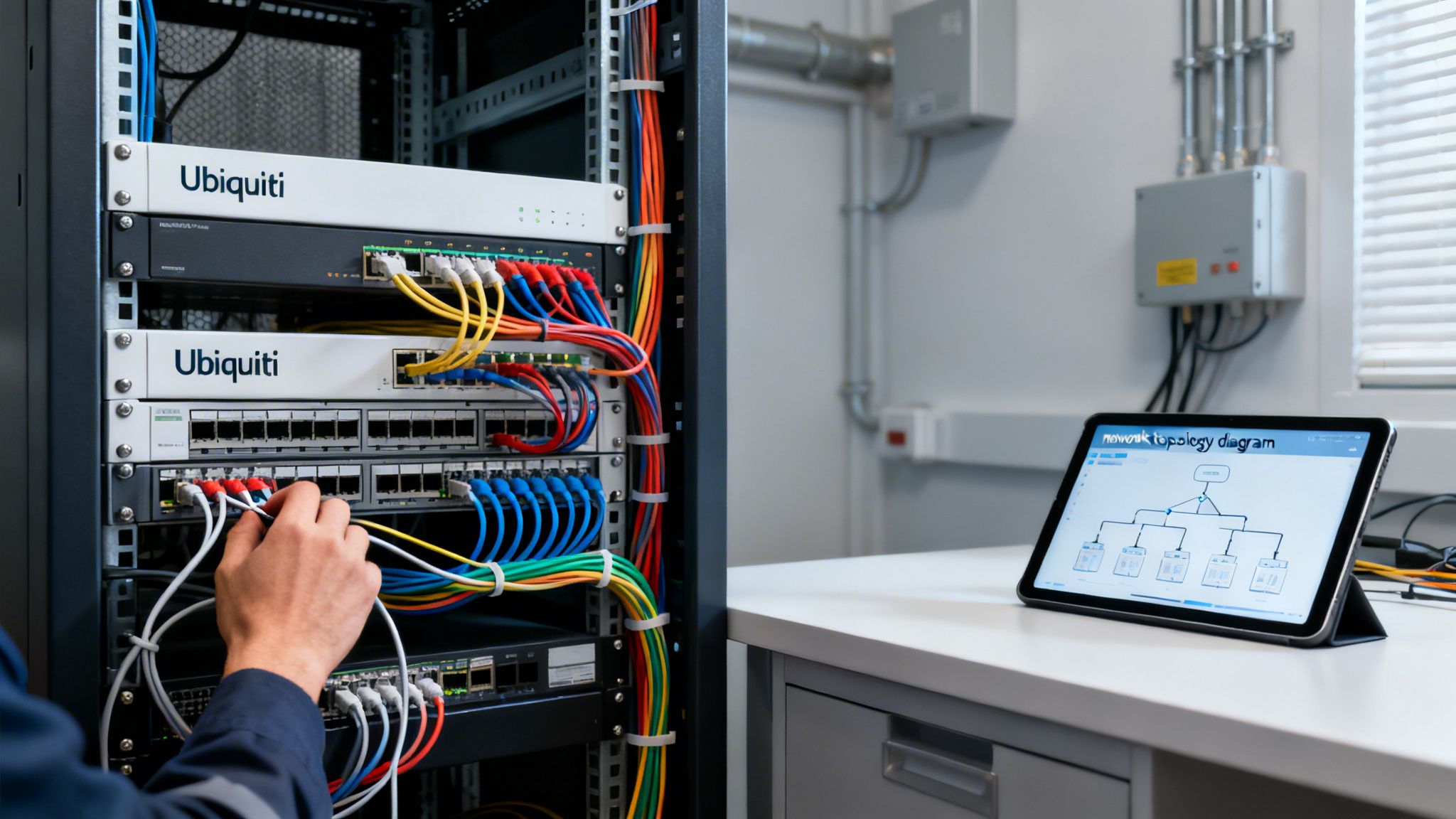
If the network is weak, everything above it feels unreliable.
That shows up in familiar ways. Sonos drops rooms. Cameras load slowly. Voice control misses commands. Streaming buffers in the theater. Mobile devices hang when roaming between access points.
Ubiquiti and similar managed networking platforms help because they give the installer better visibility into coverage, switching, wireless performance, and device behavior. They also make service easier later. If you are already fighting weak coverage, this guide on how to improve WiFi signal strength is a useful starting point.
A lot of DIY systems struggle because each brand solves only its own corner.
Lutron may control lighting beautifully. Sonos may handle music well. A TV platform may stream fine on its own. But unless someone designs the handoff between those systems, the homeowner ends up managing exceptions all day.
That is where a central control approach earns its keep. Josh.ai can unify room control so a single spoken request or button press can trigger lighting scenes, shades, media, and other programmed actions in a way that feels natural.
A clean setup looks like this:
The value is not just convenience. It is consistency.
A 2025 Parks Associates study found that 42% of users abandon their smart home systems within a year due to glitches from poorly integrated platforms, as cited in this Residential Systems review of smart home market challenges. That number tracks with what installers see in the field. Homeowners can tolerate a learning curve. They do not tolerate daily friction for long.
A practical integration process includes:
Here is a useful walk-through of that mindset in action:
Tip: The smartest house is not the one with the most devices. It is the one where the homeowner does not have to think about the devices at all.
One option in southern Wisconsin is Home AV Pros, which handles residential automation, home theater, whole-home audio, outdoor systems, and network-backed control around brands such as Josh.ai, Lutron, Sonos, Kaleidescape, Oelo, and Ubiquiti. What matters most, regardless of firm, is that one team owns design, installation, programming, and support together.
A successful smart home feels quiet in the best way. Lights respond the way you expect. Music starts where you want it. The theater works without a ritual. Outdoor lighting, surveillance, networking, and control all feel like part of the house instead of a collection of products.
That result comes from disciplined planning, careful installation, and support after the project is done. It also comes from making smart decisions early, in new builds and major renovations where wiring, equipment locations, and control strategy shape everything that follows.
For homeowners and builders in the Madison and Milwaukee area, the strongest projects share the same pattern. The vision is clear. The scope is realistic. The network is treated as infrastructure. Premium systems like Lutron, Josh.ai, Sonos, Kaleidescape, Oelo, and Ubiquiti are selected for a reason, not because they were trendy.
If you want a home that functions smoothly and looks finished, choose smart home installers who can design the entire experience, not just install the parts.
If you’re planning a new build, remodeling a main living space, upgrading a theater, or trying to unify lighting, audio, Wi-Fi, and control, Home AV Pros can help you sort out the right scope before money gets spent in the wrong places. A consultation is the easiest way to turn a loose idea into a workable plan for your home.

Copyright © 2026. Home AV pros. All rights reserved.
Robert says:
Great article about smart home install.
ng.yandaz.com says:
thisis a fantastic article, really nice created, i enjoy reading it, i will be back to check out for latest update, keep up the good work and applause. ng.yandaz.com