
If you're typing "low voltage wiring contractors near me" into a search bar, you're on the right track—and you probably already know you need more than a standard electrician. You're looking for a specialist, someone who understands the intricate web of wiring that makes a modern smart home tick. It’s these pros who bring everything from your Josh.ai voice control to your Lutron lighting system to life. For homeowners here in the Madison-Milwaukee corridor, that’s exactly what we do at Home AV Pros.
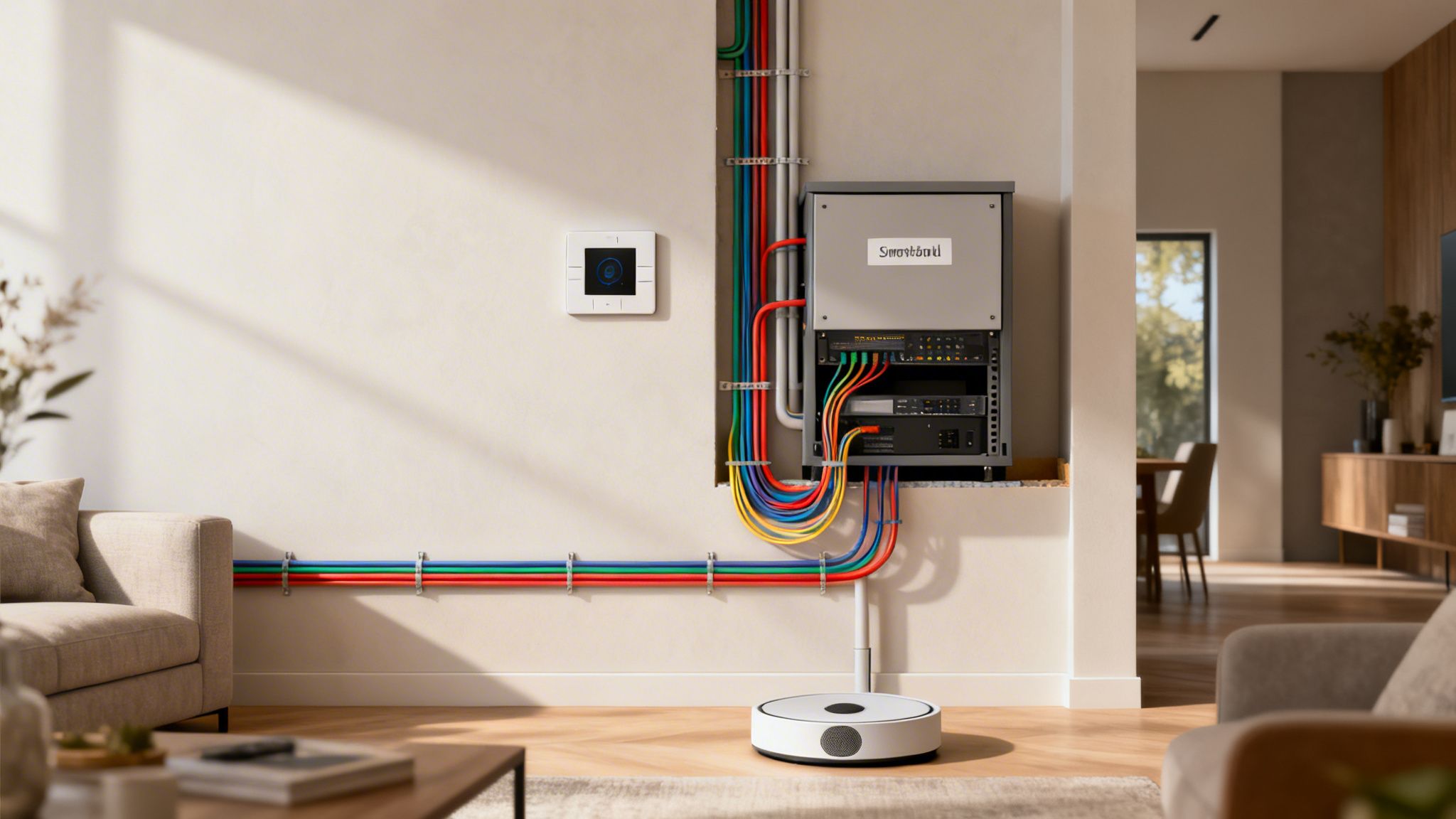
Think of low voltage wiring as your home's central nervous system. It's the essential, yet often invisible, network that powers all the technology you depend on daily. Without a professionally designed and installed low-voltage backbone, even the most high-end smart devices will feel sluggish and unreliable.
Our primary focus at Home AV Pros is on building that rock-solid foundation for residential projects, from new home builds to custom home theaters and sophisticated home audio solutions. We believe technology should make your life simpler and more enjoyable, fading into the background instead of causing headaches.
So what exactly relies on this specialized wiring? It’s the behind-the-scenes magic for the systems that define a truly modern home. Here’s a quick look at some of the premier home automation and entertainment systems we integrate that require a robust low-voltage infrastructure to work flawlessly.
| System Type | What It Powers | Example Brands We Integrate |
|---|---|---|
| Home Networking | Wi-Fi access points, hardwired data ports, and network switches for a seamless smart home. | Ubiquiti |
| Smart Lighting & Shades | Centralized control panels, dimmers, keypads, and motorized window treatments. | Lutron |
| Home Audio & Video | Multi-room audio speakers, custom home theaters, and high-fidelity media servers. | Sonos, Kaleidescape |
| Outdoor Entertainment | All-weather speakers, permanent holiday lighting, and landscape lighting systems. | Oelo |
| Home Automation | The central voice processor or "brain" that allows all your separate systems to communicate naturally. | Josh.ai |
These systems are just the beginning. From immersive home theaters to intuitive voice control, a clean, well-planned low-voltage installation is what makes it all possible.
The smart home market, which is built on these systems, hit $135 billion in 2023 and is still climbing. This explosion in popularity has fueled a 45% jump in demand for qualified low-voltage contractors right here in the Madison and Milwaukee areas since 2020. This trend is clear when you look at industry data from organizations like the BBB.
While we love creating amazing home automation experiences, our work doesn't stop there. We’re often brought in as a single, trusted partner to handle all the low-voltage needs for a home, especially during new construction. This ensures the house is ready for whatever technology comes next.
We also design and build custom home theaters, install immersive landscape lighting and sound systems with brands like Oelo, and provide comprehensive home audio solutions using systems like Sonos. For new home builds, we lay the crucial groundwork for all smart systems. While our main focus is residential, we also bring our expertise to select commercial projects like restaurants needing reliable AV and networking from providers like Ubiquiti.
To see just how crucial proper wiring is for outdoor features, you can check out our guide on https://homeavpros.com/how-to-wire-low-voltage-lighting/.
Let's be honest, simply Googling "low voltage wiring contractors near me" and picking the first result is a recipe for disappointment. You’re not just looking for someone to pull wires. You need an integration partner who can build the digital backbone of your home, making sure every piece of tech talks to each other flawlessly.
Think about it this way: a general electrician can certainly run a cable from point A to point B. But do they understand the specific network requirements for a Kaleidescape movie server or the delicate wiring needed for a responsive Josh.ai voice control setup? Almost certainly not. That’s where a specialist comes in.
Here's an insider tip: skip the generic searches and go straight to the source. If you have specific high-end brands in mind for your home, start with their dealer locators. Companies like Lutron, Sonos, and Ubiquiti all have them on their websites.
This is the fastest way to create a shortlist of qualified pros. It instantly filters your search to contractors who have already invested the time and money into getting certified, proving they have a track record with the exact technology you want.
So, if you’re building a new home in Lake Geneva and dreaming of a sophisticated lighting system, your first move should be to find a certified Lutron installer. You’re guaranteeing you get someone who knows how to design, install, and program these complex systems right from the very beginning.
A true integrator isn't just an installer; they're a technology consultant. Their real value lies in making a dozen different systems—like Sonos audio, Oelo permanent lighting, and your commercial-grade Ubiquiti network—all work together as one simple, reliable experience.
Once you have a few names, it's time to vet them. A portfolio is your best window into their capabilities. Look for projects that feel like what you’re trying to achieve. Are you building a new home, creating a custom home theater, or just adding some landscape audio? Find a contractor who has already done it successfully.
Beyond the pretty pictures, it’s always smart to cover your bases by following best practices for hiring any trade. This guide to finding local construction companies offers a great foundation for checking essentials like licenses, insurance, and references. You can also get a better sense of the industry by reading up on the different types of home automation installation companies out there.
Your goal is to find a team that speaks your language and understands high-performance AV and automation. They should be able to confidently explain the pros and cons of different systems and design a solution that truly fits your lifestyle, whether you're in Madison, Milwaukee, or anywhere in between.
Alright, you’ve got a shortlist of potential contractors. Now comes the most important part: digging in to see who really has the chops for your project. This is more than just checking a few boxes; you're looking for a technology partner who understands your vision and can bring it to life without headaches.
Whether you're planning a custom home theater, wiring a new build for full automation with systems like Josh.ai, or want a great whole-home audio system from Sonos, this is how you separate the true pros from the rest.
Before you even start talking about cool gadgets, there are three things you absolutely must verify. Think of these as the bare minimum for letting anyone work on your home. If a contractor can't provide these instantly, walk away.
A portfolio isn’t just a gallery of finished projects—it’s a resume of their real-world experience. You want to see work that looks like what you have in mind, both in scale and complexity. If you're building from the ground up for a new home, ask to see photos of their pre-wire jobs. If you're outfitting a restaurant, you'll want to see their commercial AV installations.
The low-voltage industry is booming, with a 15% annual growth rate since 2015, thanks to the demand for smart home automation and high-end entertainment. This growth has attracted a lot of new players, making it crucial to find an established pro who can handle a complete project from start to finish.
Look for specific systems in their portfolio. When you see a contractor proudly showing off a project with Josh.ai voice control, a Kaleidescape movie server, or a seamless Sonos system, you know they're comfortable with high-performance residential tech. This is your chance to see how they integrate everything from landscape lighting and sound to complex home audio solutions. You can also see what a top-tier portfolio includes by checking out our own work as an audio-visual contractor.
Speaking with past clients is your best source for the unvarnished truth. When a contractor gives you references, don't just ask if they were happy with the work. You need to ask the questions that reveal what it’s really like to work with them.
Try asking these:
The answers will tell you everything you need to know about their process and their commitment to client satisfaction, which is just as important as the final result.
When that first proposal from a low-voltage contractor lands in your inbox, it can be a lot to take in. But a good quote does more than just give you a final price—it tells a story. It should clearly show that the installer has listened, understood your vision, and mapped out a precise plan to get there, whether you're building a new smart home from the ground up or just upgrading your family room audio.
Be wary of any quote that's just a single number on a page. That's a huge red flag. A true professional, like the team at Home AV Pros, will provide a detailed breakdown that leaves no room for guessing. You should see everything itemized, from the hardware to the labor to the all-important system programming.
A detailed proposal isn't just about transparency; it's about building your confidence. You need to know exactly what you’re paying for.
This level of detail is your best tool for comparing apples to apples between different contractors. It also proves the installer has a real execution strategy. For a deeper dive into how all these pieces fit into a final budget, our guide on the cost of a home automation system offers some great insights.
Before you even get to the quote, though, a solid vetting process is key. It's the foundation for finding a partner you can trust.
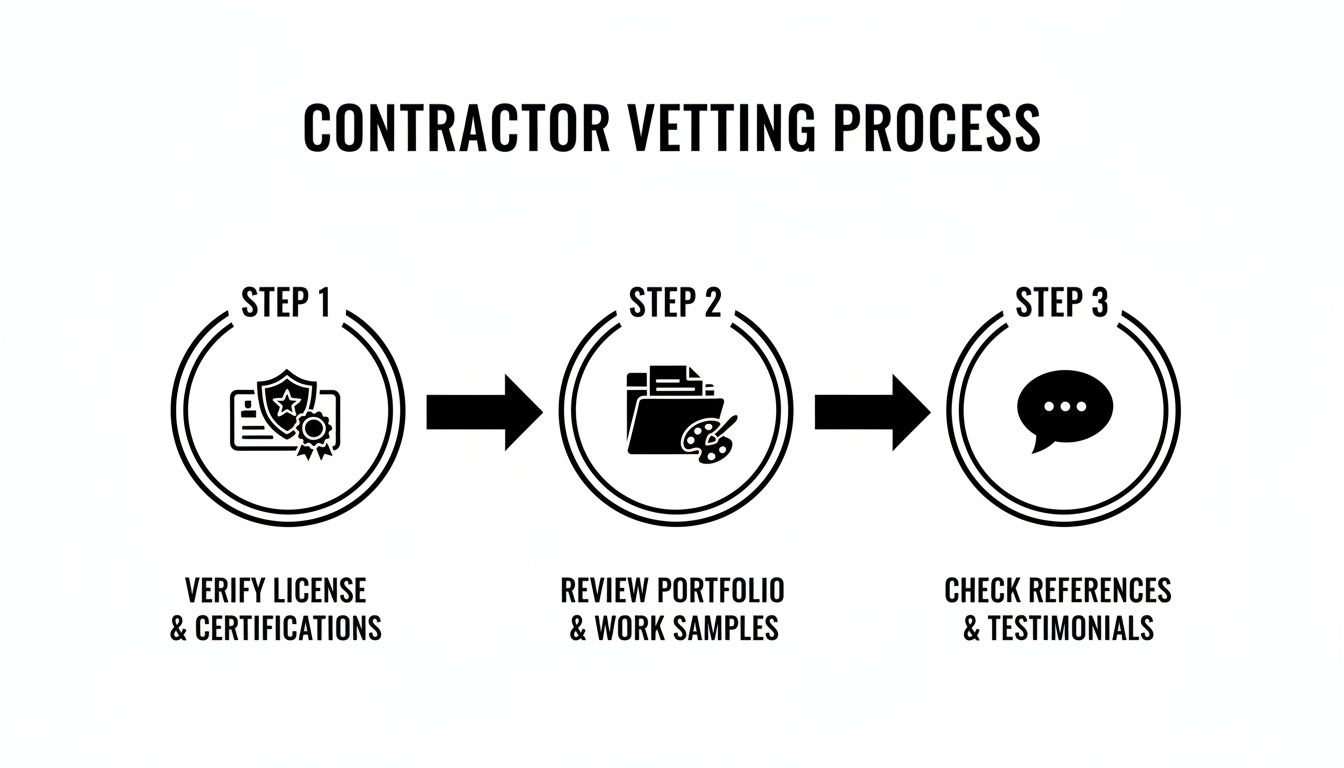
Checking these three boxes—licensing, past work, and what other clients have to say—is non-negotiable. It’s how you separate the pros from the pretenders.
Money is only half the equation; you also need to understand the project’s flow. A professional contractor won’t just hand you a bill—they’ll walk you through every phase so you’re never left wondering what’s next. While no two jobs are identical, most residential projects follow a predictable path.
A well-managed project isn't just about the end result; it's about clear communication and a predictable process. From a new construction pre-wire to installing landscape lighting and sound, knowing the steps eliminates surprises and ensures a smooth experience.
If you’re building a new home or doing a major remodel, the timeline will generally follow these five key phases:
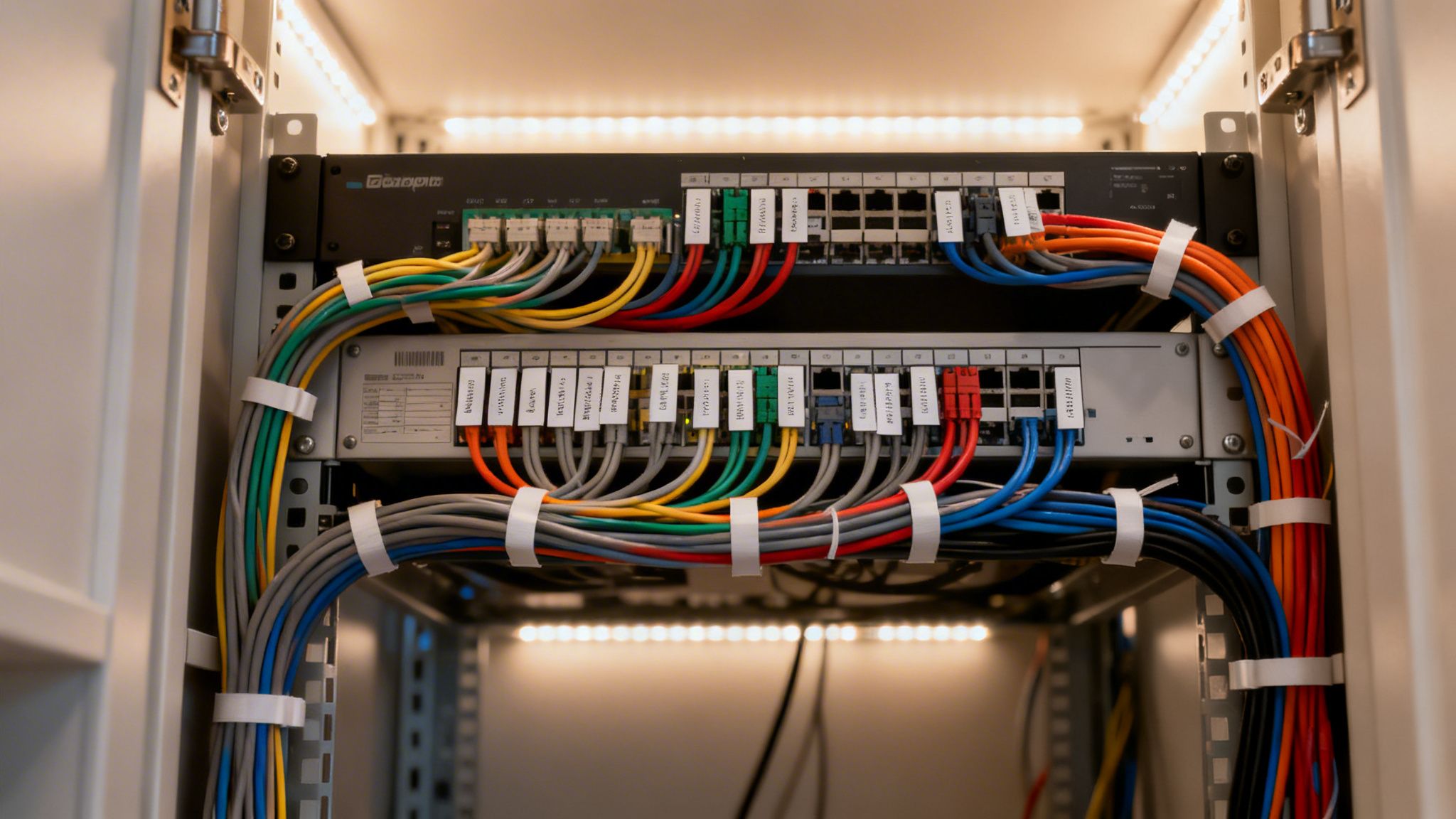
Once the drywall is up and the paint is dry, how can you tell if the wiring job was done right? It really comes down to the details you can't see—the things that determine whether your smart home is a dream or a constant headache. A top-tier low voltage wiring contractor doesn't just connect devices; they build a reliable digital foundation for your home.
The most visible sign of quality work is the network rack. A pro’s work is immediately obvious: clean, neatly managed cables, all clearly labeled. It’s a far cry from the tangled "rat's nest" that an amateur often leaves behind. This isn't just about looking good; it makes troubleshooting, maintenance, and future upgrades infinitely easier and less expensive.
An experienced contractor always has an eye on tomorrow. We call this future-proofing. It’s the simple but critical practice of running extra conduit or higher-capacity cables to key locations while the walls are open during construction or a remodel.
It might seem like a small thing, but that little bit of extra planning can save you thousands of dollars down the road. When you decide to add a new Kaleidescape movie server or upgrade to the latest Ubiquiti Wi-Fi system, the infrastructure is already there. No cutting, no patching, no mess.
I’ve seen it countless times in my career: people trying to save a buck on wiring only to spend five times as much later to fix it. There's a sobering reason for this. A staggering 75% of smart home failures can be traced directly back to poor low-voltage wiring. If you want to dig deeper into finding qualified pros, Thumbtack's guide on local contractors has some solid data.
Of course, a professional job also shines in its final appearance. Great technology should feel integrated, not just installed. Think perfectly flush-mounted Sonos in-ceiling speakers, elegant Lutron keypads that complement your decor, and security cameras placed so discreetly you barely notice them. The goal is to make the tech virtually disappear, leaving you with just the experience.
This philosophy applies to any project, whether it’s a custom home theater, wiring for a new home, or installing landscape lighting and audio. Even in a commercial space like a restaurant, the AV system should enhance the ambiance, not clutter it.
Finally, a true professional stands by their work long after the installation is complete. Smart home technology is always evolving, with systems like Josh.ai and your home network constantly getting software updates.
A contractor you can trust will always offer:
This kind of long-term partnership is what ensures your home's technology—from your Oelo permanent holiday lights to your whole-home audio—works perfectly for years to come.
If you're just starting to look into smart home technology, you've probably got a few questions. This is a specialized field, and it’s smart to get a handle on the basics before you dive in. Let's walk through some of the things we talk about with homeowners every day.
This is easily one of the most common questions we get. While your licensed electrician is the absolute pro for high-voltage wiring—the kind that powers your outlets, light fixtures, and major appliances—they typically don't specialize in low-voltage systems.
Smart home tech runs on a different kind of wiring for data, audio, and control signals. Getting it right is a unique skill. A dedicated low-voltage contractor knows how to run cables for systems like Ubiquiti networks or Lutron lighting to prevent signal interference, network lag, and frustrating system glitches. For something like a custom home theater, using a specialist is the only way to guarantee you're getting the performance you paid for.
System integration is where the real magic happens. It’s the art and science of getting all your individual smart devices to communicate and work together as a single, intuitive system.
Think of it like this: You say one command, like "Movie Night," to your Josh.ai voice assistant. Integration is what makes your Lutron lights dim, the shades close, your Kaleidescape movie server turn on, and the Sonos surround sound adjust to the perfect volume—all at once.
A true integrator doesn’t just plug in devices. They program a seamless experience that feels natural and effortless. It’s what turns a house full of cool gadgets into a genuinely smart home that works for you.
Pre-wiring a new build or a major renovation is one of the best investments you can make in your home's future. It gives a contractor the chance to run all the necessary low-voltage cables for speakers, security cameras, Wi-Fi access points, and more before the drywall goes up.
The process is far cleaner, much more affordable, and ensures every wire is perfectly placed for optimal performance. Trying to retrofit wires into finished walls later is not only more expensive but also a whole lot messier. Planning for tech with an integrator during the design phase makes your home ready for whatever you want to add, now or five years from now.
It’s a bit of a paradox, but the word "wireless" can be misleading. While your phone connects to Wi-Fi without a cord, the network itself relies on a rock-solid, high-speed wired foundation. To get strong Wi-Fi coverage across your entire house and yard—especially for outdoor systems like Oelo lighting or landscape audio—we install hardwired access points in strategic locations.
The same principle applies to audio. While a single Sonos speaker can work wirelessly, the best-sounding and most reliable setups involve hardwiring key components. This is especially true for things like TV soundbars or multi-room audio amplifiers. A physical connection guarantees a stable, high-resolution signal without dropouts.
Ready to see how a professionally designed system can transform your home? The team at Home AV Pros specializes in creating reliable, elegant, and easy-to-use smart home solutions built around your lifestyle.
Visit us online to schedule your free in-home consultation today!

Copyright © 2026. Home AV pros. All rights reserved.