
A dark patch in the yard usually starts as a small annoyance. One uplight stops working, the tree canopy loses its shape, and suddenly the whole front elevation looks off balance.
That's why exterior lighting bulb replacement matters more than most homeowners expect. Exterior lighting is designed as a composition. When one fixture drops out, it's not just one bulb. It changes depth, safety, curb appeal, and how the property feels when you pull in at night.
As an AV and automation integrator, I also look at that burnt-out lamp a little differently. Sometimes it really is just a quick swap. Other times, it's the first sign that an older outdoor lighting system is overdue for better planning, smarter control, or a move into the same ecosystem as the rest of the home, whether that means Lutron lighting control, Josh.ai voice control, Sonos audio on the patio, or a more complete outdoor experience tied into a new build.
It usually happens after you've already dialed in the look of the house. The path lights are working, the trees are lit correctly, the facade has just enough contrast, and then one fixture goes dark. You notice it every time you come home.
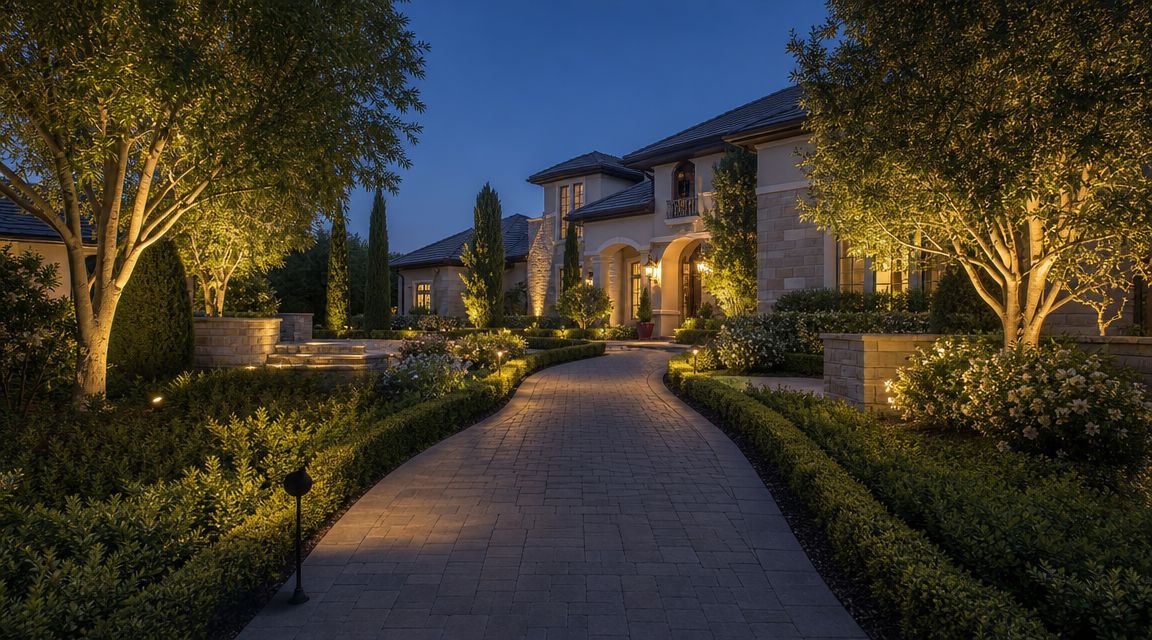
A single failed lamp can make a clean lighting design look neglected. The frustrating part is that many homeowners replace the bulb, restore the light, and move on without asking a more useful question. Was this just normal maintenance, or is the system telling you something about fixture age, compatibility, moisture, or power delivery?
Outdoor lighting works by layering focal points. Remove one uplight under a specimen tree or one wash light on a stone wall, and your eye goes straight to the gap. That's especially noticeable when the rest of the system still works.
There's also a practical side. A failed path or step light changes how people move through the property at night. If you use outdoor zones for entertaining, that one dead fixture can make the entire patio edge or planting bed feel unfinished.
A small lighting failure often reveals a bigger system decision. Keep patching an old setup, or use the moment to improve reliability and control.
If you're already checking other seasonal lighting around the property, a simple diagnostic tool like a bulb tester for Christmas lights can help you think more systematically about what's failed and what hasn't. It's not a substitute for outdoor low-voltage troubleshooting, but it points to the same mindset. Don't guess when you can verify.
Outdoor lighting begins to overlap with home automation. A homeowner replaces one lamp, then realizes the back patio still runs on a basic timer, the side yard is too dim, and the lighting isn't coordinated with audio, shades, or evening scenes inside the house.
That's when a basic maintenance call turns into a better project. The goal isn't just getting the light back on. It's making the exterior easier to live with every night.
Most mistakes happen before the fixture is even opened. Homeowners buy a lamp that looks close enough, install it, and then end up with the wrong beam spread, the wrong base, or the wrong voltage.
The first job is identification. Pull the old lamp and read every marking you can find on it and on the fixture. Don't rely on appearance alone. Exterior fixtures often use similar-looking lamps that are not interchangeable in practice.
A frequently missed issue is compatibility. Many outdoor fixtures use different lamp bases and form factors such as MR16, T3, and mini bi-pin, and the beam angle affects the lighting result, not just brightness, as noted in this landscape bulb compatibility video.
That matters because a successful outdoor lighting bulb replacement isn't just about making light. It's about restoring the intended effect.
Here's a quick field reference:
| Bulb Type | Common Base | Typical Use | Key Feature |
|---|---|---|---|
| MR16 | Bi-pin | Uplights, accents, small spot fixtures | Often chosen when beam control matters |
| T3 | Bi-pin | Compact fixtures, accent applications | Small form factor for tight housings |
| Mini bi-pin | Bi-pin | Path, accent, and specialty fixtures | Socket fit is the critical check |
After the lamp type, check the system voltage. Many residential outdoor systems are low voltage, but not every outdoor fixture is. A bulb that physically fits can still be wrong for the circuit.
Focus on these details before you buy anything:
If your property uses a low-voltage layout, it helps to understand how the overall system is built before you order replacements. This guide to low-voltage landscape lighting is a useful reference point for how these systems are typically configured.
A lamp can be electrically correct and still look wrong. That usually comes down to beam angle.
A narrower beam creates a tighter, more dramatic uplight. A wider beam spreads light across a wall, planting bed, or facade. Swap one for the other and the fixture may work perfectly while the lighting design still looks off.
Practical rule: Match the old lamp's beam behavior, not just its label. If you liked the original look, preserve the optic effect before you experiment.
This is especially important on focal trees, stone columns, and wash lights. If you're trying to improve the look, then yes, you can intentionally change spread or color tone. But do that on purpose, not by accident.
Once you've got the right replacement in hand, slow down. Outdoor fixtures deal with heat, moisture, dirt, tight housings, and aging seals. A rushed swap creates more problems than it solves.
For safe outdoor lighting bulb replacement, the reliable method is to de-energize the circuit, let the fixture cool for at least 10 minutes, open the lens or frame, and handle the lamp with thin cotton or plastic gloves to avoid skin oils on the glass or LED contacts, according to this landscape bulb replacement guide.
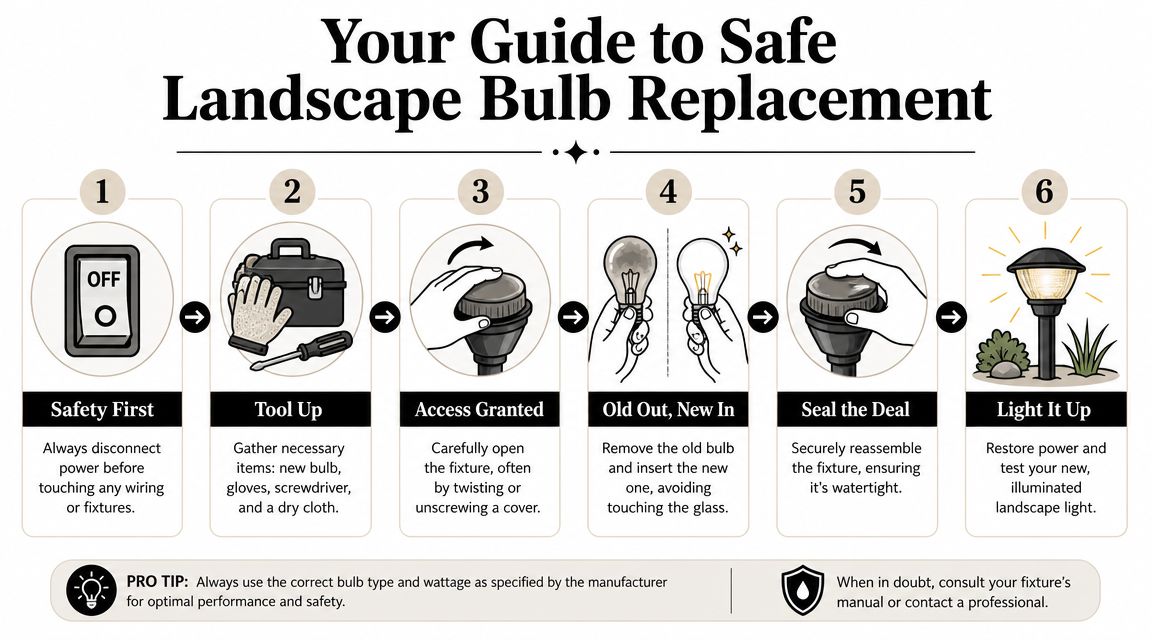
Turn the system off at the transformer or the proper power source. Don't trust a wall switch or timer setting if the fixture is still part of an energized circuit.
Then wait. Hot lamps and hot housings are easy to underestimate, especially in enclosed uplights.
Older fixtures can be stubborn. Gaskets stick. Lens frames seize. Dirt packs into threads.
Work gently and keep track of every small part you remove. If the fixture has a weather seal, inspect it before reassembly. A damaged or misaligned seal is often the start of the next service call.
A clean replacement process usually looks like this:
After the lamp is seated, close the fixture completely. Don't leave a lens slightly loose because you want to test quickly. Water always finds the shortcut.
If you need a better understanding of wiring paths, transformer location, or fixture runs before you open multiple lights, this overview of how to wire low-voltage lighting helps frame what you're working with.
If a replacement bulb doesn't fit smoothly, stop. The problem is usually compatibility or socket condition, not installer strength.
Restore power only after the fixture is fully sealed. Then check the light after dark if possible. Daytime testing confirms operation. Night testing confirms the lighting effect.
A failed halogen lamp is often the moment a homeowner decides whether to keep maintaining an older system or modernize it.
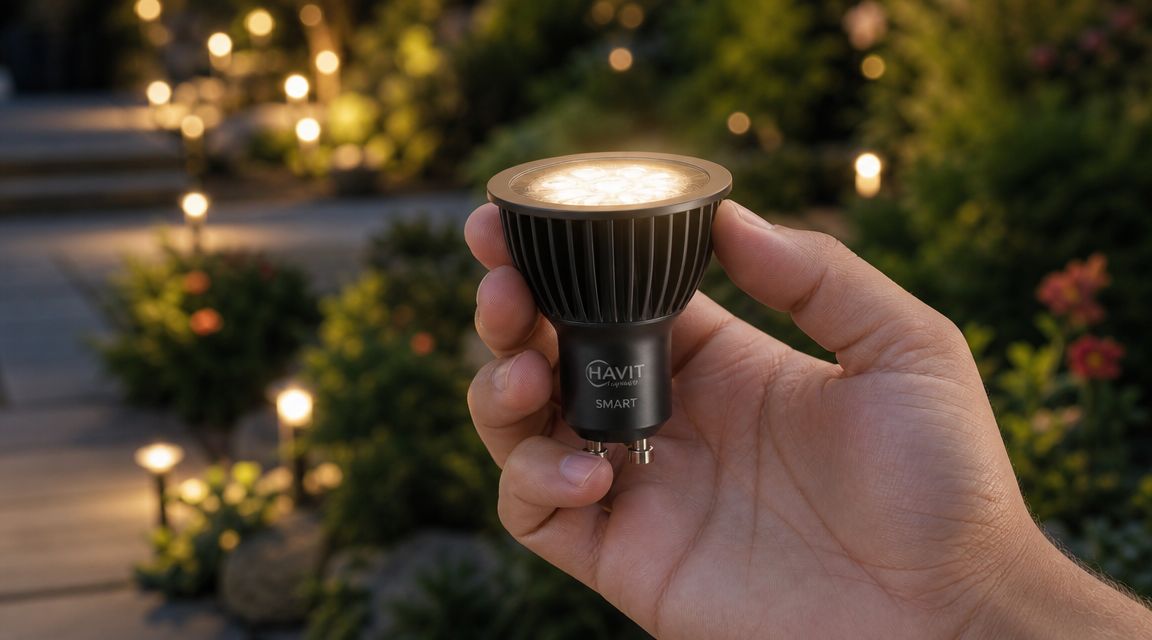
The case for upgrading is straightforward. LED outdoor lighting typically uses about 80% less electricity than halogen bulbs and lasts about 30,000 to 50,000 hours, compared with roughly 2,000 hours for halogen, according to this outdoor lighting guidance on LED and halogen lamp life. That difference is a big reason integrated LED fixtures have become common.
There are two practical paths.
A retrofit LED lamp makes sense when the existing fixture is still in good condition, the socket is sound, and the optics still suit the space. This is the lighter-touch move. You keep the housing and change the light source.
An integrated LED fixture is a bigger shift. These fixtures use built-in light sources rather than traditional replaceable bulbs. That changes maintenance expectations, but it can also simplify the system visually and reduce recurring lamp swaps.
Which route works better depends on fixture condition, the age of the installation, and how important consistency is across the whole property.
Outdoor lighting transitions from a standalone utility to an integral part of the home. A professionally integrated system can bring exterior lights into the same scenes and routines as interior lighting, shades, audio, and security.
With Lutron, outdoor zones can be scheduled and grouped cleanly. With Josh.ai, those scenes can become natural voice commands. “Turn on the patio,” “Evening scene,” or “Backyard entertaining” makes a lot more sense than chasing old timers and photocells.
And if you're designing the property from the ground up, outdoor lighting should be planned the same way you'd plan distributed audio, networking, and control. That's especially true for homes with Sonos zones outdoors, Oelo permanent lighting, or whole-property automation expectations.
A good design process starts before fixtures are selected. This guide on how to design landscape lighting is worth reviewing if you're looking at more than a one-bulb fix.
Here's a short visual overview of the kind of upgrade thinking that helps homeowners move from maintenance to a more complete lighting plan:
In residential projects, the best outdoor systems feel quiet and automatic. Path lights come on when they should. Patio scenes match the mood. Audio starts in the right zones. Voice control works naturally. Nothing feels pieced together.
That's the same design mindset we use across homes for custom theaters, whole-home audio, networking, and outdoor living spaces. Commercial spaces like restaurants can benefit too, but the strongest use case is still the home, where lighting, sound, and control need to match how the family lives.
If the new lamp doesn't solve it, stop replacing bulbs. Repeated lamp failure usually points to a system issue.
The most common one in low-voltage outdoor lighting is voltage drop. One industry guide notes that many systems fail from voltage drop rather than the lamp itself, and recommends grouping fixtures into distance zones, using 12-gauge cable when wattage times run length is under 10,000, using 10-gauge cable or splitting the zone when it is 10,001 to 15,000, and keeping at least a 20% transformer capacity buffer to avoid overload and premature failure, according to this landscape lighting planning guide.
A single dark fixture can be a lamp. A whole branch of lights going dim or failing toward the end of a run often suggests power delivery trouble.
Look at patterns, not just fixtures:
Start at the transformer. Make sure it's operating, the breaker hasn't tripped, and any timer or control device is doing what you think it's doing. Then inspect wire connections at the failed fixture and nearby junction points.
Corrosion is common in outdoor environments. So is a compromised gasket that lets moisture into the housing and socket.
If the replacement works for a short time and fails again, the bulb probably wasn't the root problem.
This is also where planning separates a dependable system from one that constantly needs attention. Cable layout, fixture grouping, transformer sizing, and realistic expansion room matter far more outdoors than many homeowners realize.
A straightforward lamp swap is a reasonable DIY task. Full redesigns, persistent outages, and integrated control projects usually aren't.
If you're building a new home, renovating the exterior, or trying to bring outdoor lighting into a broader smart home system, the work quickly moves beyond bulb replacement. Fixture selection, cable paths, load planning, control programming, Wi-Fi coverage, audio zones, and nighttime aiming all have to work together.
That's where landscape lighting design services become useful. For homeowners, the goal is usually a coordinated system that includes outdoor lighting and sound, reliable control, and clean installation that fits the architecture. In the same property, that may sit alongside automated shades, Sonos audio, Josh.ai voice control, Lutron lighting, Ubiquiti networking, or a dedicated theater and media setup indoors.
Home AV Pros handles that broader category of work for homes first, while also supporting projects like restaurants, new home builds, home audio solutions, custom home theater, outdoor lighting, and sound. The practical difference is that the outdoor lighting isn't treated as an isolated add-on. It's designed as part of the way the property functions at night.
If your issue has moved past “one burnt-out bulb,” calling a pro usually saves time, avoids repeat failures, and gets you closer to a system that feels intentional.
If your outdoor lighting needs more than a simple lamp swap, Home AV Pros can help evaluate the system, identify fixture and control options, and plan an integrated solution for your home's lighting, audio, networking, and automation.

Copyright © 2026. Home AV pros. All rights reserved.